The Great Gardens of Italy Tour 2027
Discover Italy’s finest gardens on an intimate, small group journey designed for garden enthusiasts and cultural travellers alike.
Rugged coasts and a true southern spirit
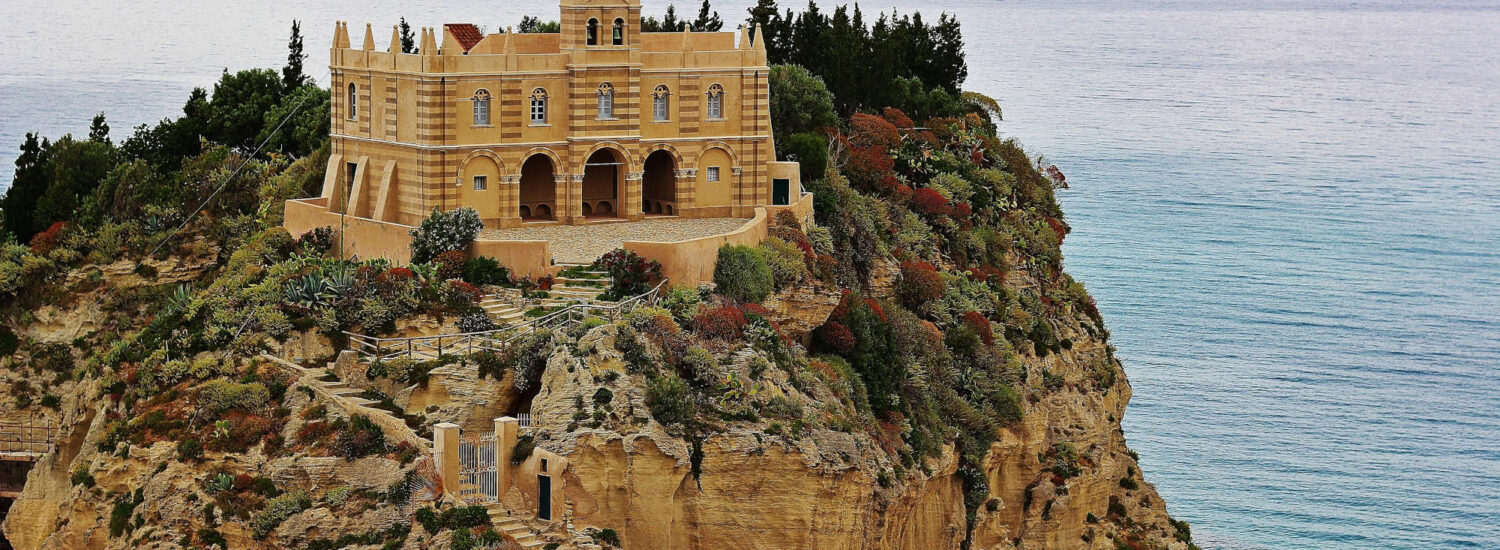
Calabria sits at the tip of Italy between the Tyrrhenian and Ionian seas, offering distinct coastal personalities. The Tyrrhenian side (toward Sicily) features dramatic rocky headlands and the famous town of Tropea perched on a cliff above crystalline water. The Ionian side feels quieter, with long beaches and smaller villages. Both coasts invite slow days—time for swims, scenic drives, and coffee stops at waterfront bars with views that justify lingering.
Head inland from the coast and Calabria transforms entirely: forested mountain ranges, small hilltop towns and landscapes that feel surprisingly remote for a region so close to major tourist routes. The interior plateaus and valleys maintain traditions and ways of life that feel untouched by mass tourism. Even a single inland day provides meaningful contrast and reveals why locals have such strong regional identity.
Calabria works best with road transport or an expertly planned itinerary that balances coastal bases with inland highlights. With thoughtful routing, it pairs beautifully with Sicily or broader southern itineraries without the long transit days that undermine relaxation.
Clear seas, dramatic coastal towns, mountain landscapes, and bold regional food traditions.
Tropea and its coastline, scenic coastal viewpoints and at least one inland mountain town.
May to June and September to October for warm weather, relaxed beaches and easier touring.
Mediterranean on the coast; cooler inland with altitude. Summers are hot, winters mild.
1.8mil people across coastal towns and a more rural interior with strong traditions.
Reggio Calabria, Catanzaro (regional capital), and Cosenza.
Spicy specialities, seafood along the coast, simple pastas, and citrus-focused flavours in season.
Best by car or tour transport; trains connect key towns but many scenic areas are reached by road.
Popular ways to experience Calabria include our Short Tours and Small Group Tours to Italy through Calabria.
Discover Italy’s finest gardens on an intimate, small group journey designed for garden enthusiasts and cultural travellers alike.

Explore Tuscany through its villages, landscapes and local traditions, blending iconic towns with authentic experiences in the region’s true heartland.
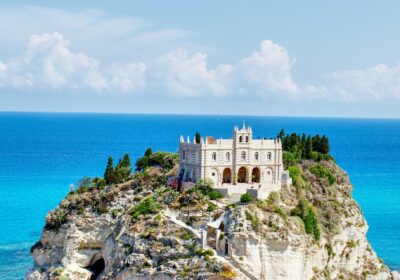
A relaxed 3-day coastal escape in Tropea featuring a small-group boat cruise along the Costa degli Dei, swimming stops, and time to explore Calabria’s cliffside gem.
Calabria announces itself with geography: it is the toe of the Italian boot, a region where the Tyrrhenian and Ionian seas meet, where mountains rise directly from the coast, and where you feel genuinely far from the usual Italian tourist routes. Arriving via Reggio Calabria or Catanzaro, the first impression is of intense Mediterranean light and a landscape that feels more Greek or Spanish than typically Italian.
Tropea, perched impossibly on a clifftop above turquoise water, is the region’s most famous town—and for good reason. The red onion of Tropea (a distinctly sweet variety) grows only here, and the town’s position, its piazza overlooking the sea, and the quality of local restaurants make it a compelling base. Spend mornings walking narrow streets, afternoons swimming from beaches accessible via stone steps, and evenings in the piazza watching light change across the Tyrrhenian. Late September is ideal—warm sea, comfortable temperatures, and thinned tourist crowds.
Scilla, on the opposite coast, sits where the strait between Calabria and Sicily narrows dramatically. The Chianalea quarter—a fishermen’s village built into the rocky shoreline—is visually arresting, with boat houses opening directly onto water. The town has two distinct beaches (one for swimmers, one more local and practical) and a sense of being a place where people actually live and work rather than purely a tourist destination. The red tuna (alalunga) is local and grilled simply—perhaps the region’s finest eating experience.
In Reggio Calabria, the Museo Nazionale della Magna Graecia holds the Riace Bronzes, two perfectly preserved Greek bronze sculptures pulled from the sea in 1972. They are extraordinary enough to justify a day visiting: sculptures at scale, anatomically perfect, and emotionally present in a way that photographs cannot convey. The museum also tells the story of Magna Graecia—the Greek colonies that dominated Southern Italy and Sicily for centuries. This context transforms understanding of the entire Southern region.
La Sila, a plateau in the interior, offers mountain escape and cooler temperatures in summer when coastal heat becomes intense. Small villages like Lorica sit at elevation, and walks through beech and pine forests provide genuine wilderness feeling. Nduja—a spreadable cured meat from Spilinga—is Calabria’s most distinctive food product; local markets and restaurants make it apparent why: the heat, the flavour, the complexity mark it as genuinely different from other Italian cured meats.
The Ionian coast differs dramatically from the Tyrrhenian; where Tropea and the western coast are dramatic cliffs and intense Mediterranean character, the Ionian side (around Crotone and Crotone) offers longer beaches, more relaxed pace, and distinctly less tourism. A true regional understanding requires experiencing both coasts and understanding their differences. Late September to early October provides ideal conditions: Mediterranean warmth, manageable crowds, and that golden light that makes the region photograph perfectly.


May–June and September are ideal for Calabria, combining warm weather with a more relaxed pace than the busiest summer weeks.
Spring suits travellers who want coastal scenery with comfortable sightseeing days. Summer is perfect for beach time and long evenings outdoors, but it can be hotter and busier. Early autumn often delivers warm seas and easier logistics, while winter is quieter and best for slow travel, food and uncrowded town exploration.
Climate figures are indicative monthly summaries derived from Open-Meteo.com historical weather data for 2015–2024.
Calabria is at its best when the bases and driving days are chosen well. We help keep it simple.
We plan around a comfortable base so you can explore without packing up every day, keeping the trip relaxed and scenic.
We help you include just enough inland time to add depth, without turning the trip into long drives.
Clear advice, transparent inclusions and trusted operator matching from our Australian team.
Ready to plan your Calabria tour? We'd love to help.
Talk to us about Calabria
One of Calabria’s simplest pleasures is a short coastal walk that ends with a long, unhurried lunch. Choose the right stretch of coast and you’ll get cliff views, clear water and that unmistakable southern light.
We like to pair this with a seafood-focused meal in a town where the cooking is direct and seasonal. It’s not a “big” activity, but it captures Calabria perfectly: scenery, honest food and time to enjoy it.
On a curated itinerary, we can recommend the best style of day based on your base town and travel pace.
Calabria offers a mix of coastal hotels, small town properties and a handful of more secluded stays. Standards can vary by location, so choosing well makes a big difference. We prioritise places with good access to the coast, easy dining options and a comfortable base for day trips.
Hotel Tirreno is an accommodation base in Tropea, Calabria featured in City Break Tropea 2026.
Hotel Tropis is an accommodation base in Tropea, Calabria featured in City Break Tropea 2026.
If you’re exploring Calabria, you may also enjoy these nearby Italian regions, each offering its own landscapes, cuisine and cultural experiences.
Late September to early October is ideal—Mediterranean warmth, smaller crowds than summer, and golden light all day. June and May work for early summer warmth, but July and August can be intensely hot inland and very crowded on coasts. The sea is warm (25-26°C) from June through October. Avoid winter when some coastal services close and heating is unreliable. The region is most appealing when you can genuinely enjoy sea and sun without managing intense crowds.
Tropea is Calabria’s most compelling base—the clifftop position, quality of restaurants, and piazza atmosphere make it excellent for two to three nights. For a quieter experience with different character, Scilla on the opposite coast offers the dramatic Chianalea fishermen’s quarter and genuine local life. Consider two nights in Tropea, a night or two exploring the Ionian coast toward Crotone, and potentially a night in Reggio Calabria to visit the Riace Bronzes museum.
Scilla is less touristic than Tropea but equally dramatic, with the Chianalea fishermen’s quarter built directly into the rocky shoreline and two distinct beach experiences. Spilinga, inland in the Tyrrhenian foothills, is the home of nduja cured meat—visiting producers or the local market reveals where this distinctive food comes from. La Sila plateau offers mountain escape and beech forest walks providing wilderness feeling. The Ionian coast towns around Crotone offer longer beaches and distinctly less tourism than the famous Tyrrhenian side.
Tropea red onions are uniquely sweet and appear throughout regional cuisine—try them grilled, raw, or in local dishes. Grilled tuna (especially red tuna from Scilla) eaten simply with lemon represents Calabria’s finest coastal eating. Nduja, the spreadable cured meat from Spilinga, is distinctive and unlike other Italian cured meats—taste it at markets or restaurants and visit producers when possible. Wines tend toward unknown small producers making Gaglioppo and other regional varieties—seeking these out at local restaurants becomes part of the regional eating experience.
A car is essential for flexible exploration of both coasts, mountain regions and small villages. While trains connect coastal towns, the region’s character lies in its smaller places—accessible only by car. The coastal roads are excellent and scenic; mountain roads require careful driving but reward with spectacular views. Reggio Calabria airport provides access; the drive north from Sicily across the strait is possible but not always practical depending on ferry schedules.
Six to eight days suits Calabria properly: two nights based in Tropea for piazza time and clifftop exploration, one night exploring the Ionian coast toward Crotone, one night in Scilla for the Chianalea experience, a day visit to Reggio Calabria for the Riace Bronzes museum, and potentially a night inland in La Sila for mountain contrast. This reveals the region’s geographic variety without constant moving.
Calabria pairs naturally with Sicily—the strait is narrow, ferries are convenient, and the two regions share Greek history and Mediterranean character. A 10-14 day itinerary exploring both reveals continuity of Southern Italian culture. Northbound, Calabria connects to Basilicata (limestone landscape and Maratea coast) for mountain-to-sea contrast. Most commonly, Calabria is included as part of a Southern Italy arc including Basilicata, Calabria and Sicily combined.
Beach and sun lovers seeking Mediterranean warmth with authentic local character. Food enthusiasts drawn to distinctive regional specialities and sea-based cuisine. Travellers interested in Greek history and archaeology (Magna Graecia context). Swimmers and water-based activity participants. It suits less well those seeking major art cities, cultural museums (except the Riace Bronzes), or significant architectural monuments. Calabria rewards slower travel and appreciation of landscape, sea, and local food culture over rapid monument-checking.