Abruzzo Italy Grande Tour 2026
An immersive journey through Italy’s most authentic and unspoilt region, where tradition and landscape remain deeply connected
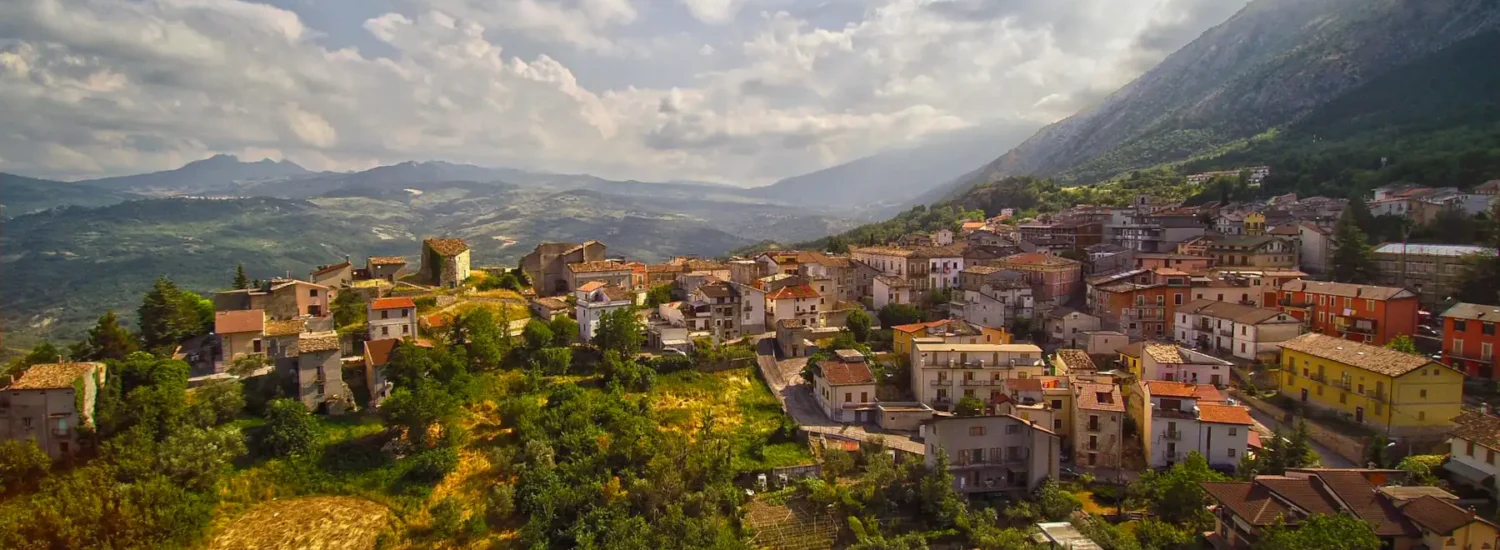
Italy's wild heart, from peaks to sea
Abruzzo is one of Italy’s premier outdoor regions, anchored by several national parks. High peaks, deep river valleys and protected beech forests create landscapes that shift dramatically from hour to hour. A morning drive through winding roads might lead to a slow lunch in a stone village, followed by a walk across a high plateau with Alpine views.
Across the interior, medieval towns sit dramatically on ridgelines and plateaus, each with distinct character. Sulmona, known for its Renaissance fountains and coloured almond confetti. Rocca Calascio stands alone at 1,460m, one of Italy’s most photographed fortresses. Local markets pulse with activity, family-run trattorie serve simple regional food, and traditions feel genuinely preserved rather than performed.
Trains connect major coastal and city centres effectively, but the region’s soul lies in its smaller towns and protected landscapes—nearly impossible to reach without a car or organised transport. A car unlocks the national parks, small family wineries, hidden villages, and the Trabocchi Coast.
National parks, mountain villages, the Trabocchi Coast, and robust local food and wine.
Rocca Calascio, Sulmona, coastal villages on the Trabocchi Coast, and the Gran Sasso landscapes.
May to June and September to October for clear days, comfortable touring and fewer crowds.
Varied: cooler and crisp in the mountains, warmer along the Adriatic with a true summer season.
1.3mil people across mountain towns and the Adriatic coast, with strong local identity.
Pescara, L’Aquila (regional capital), Teramo and Chieti.
Arrosticini, saffron, rustic pasta, sheep’s cheese and Montepulciano d’Abruzzo wine.
Best with a mix of trains for main stops and a car (or driver) for parks, villages and wineries.
Popular ways to experience Abruzzo include our Small Group Tours to Italy and La Vera Italia through Abruzzo.
An immersive journey through Italy’s most authentic and unspoilt region, where tradition and landscape remain deeply connected

A considered journey through Abruzzo’s villages, landscapes and enduring local traditions
Abruzzo reveals itself slowly, best approached in two seasons: spring for wildflowers cascading across high plateaus, or autumn when the wine harvest draws locals to the Montepulciano d’Abruzzo vineyards. Arriving in L’Aquila and driving south through the valley, you first understand the region’s scale—the Apennines genuinely rise here, serious mountains that feel Alpine until you glimpse the Adriatic below.
A natural arc moves through Sulmona, where the medieval streets open onto cafés serving Sulmona’s famous confetti, those handmade coloured almonds that have been produced here since the Renaissance. From there, head east toward Rocca Calascio, standing improbably alone at 1,460 metres—there is no town around it, just ancient stone perched on a high rocky outcrop with Apennine views stretching toward both coasts. Santo Stefano di Sessanio lies just below, a village of grey stone where almost no tourists venture; the local restaurateur sources everything within a few kilometres, and the experience feels like dining at a friend’s table rather than in a tourist establishment.
The Navelli saffron fields are a lesser-known marvel, particularly in August when the purple crocuses flower across these high plateaus. Visiting a saffron producer and learning how each stigma is hand-harvested yields a genuine moment of understanding what “quality” actually means. The saffron tastes not just like flavour, but like place—mineral, with a hint of iron from the volcanic soil.
The Trabocchi Coast, north of Pescara, deserves more than a quick stop. These wooden fishing platforms have stood in the same spots for centuries, and several have been converted into simple restaurants where a plate of grilled fish and a glass of white wine become the entire point of the afternoon. The sea here is calm, protected, and the Adriatic sun on these platforms has a particular quality that makes time feel irrelevant.
Arrosticini—small meat skewers cooked on charcoal—are street food tradition in Pescara and the surrounding towns. Buy them from a vendor, eat them with bread and a pinch of salt, and understand why locals consider this the region’s most perfect meal. They are never fancy; they are only ever excellent.
October brings an unexpected gift: the wine harvest transforms the Montepulciano valley into a place of genuine activity, with wineries open and enthusiastic, and the autumn light giving the sandstone villages that golden hour quality all day long. This is when Abruzzo feels most alive, and when the food—rich stews, fresh pasta with meat sauces, the year’s first grapes—reminds you why people have stayed here for millennia.


May–June and September–early October are the most comfortable times to explore Abruzzo, with mild temperatures and a good balance between coast and mountains.
Spring brings greener valleys and excellent conditions for hill towns and national park drives. Summer is ideal if you want beach time plus cooler mountain escapes. Autumn is a highlight for food-focused travel and crisp walking days, while winter suits travellers who like quiet towns and the option of snow-season time at higher elevations.
Climate figures are indicative monthly summaries derived from Open-Meteo.com historical weather data for 2015–2024.
Abruzzo works best with thoughtful pacing. Here are a few ways we help make the trip feel effortless.
We help connect mountain scenery, villages and the coast without long backtracking days, so the journey feels relaxed rather than rushed.
Where the best experiences are outside the main transport corridors, we can match you to tours that include smooth transport and well-chosen stops.
You get straightforward advice, transparent inclusions and responsive support through planning, booking and travel.
Ready to plan your Abruzzo tour? We'd love to help.
Talk to us about Abruzzo
Abruzzo is a region where the simplest moments often become the most memorable. One of our favourite inclusions is a relaxed lunch in a hill town like Sulmona, with its Renaissance monuments and cobbled streets, followed by a small, producer-led wine tasting in a family winery.
You’ll taste regional reds with genuine character, eat simple handmade pasta and local pecorino cheese, and feel a pace of life that feels unmistakably “Abruzzo”. Done well, it provides a chance to pause, take in the surrounding landscape, and understand the region the way locals experience it daily.
Spring and early autumn offer ideal conditions for comfortable warmth, crystal-clear views across the mountains, and that unmistakable sense of being genuinely removed from crowds.
Abruzzo accommodation ranges from comfortable coastal hotels to characterful stays in historic towns and countryside properties. The best options tend to be smaller and locally run, with limited room inventory in peak months. On a curated itinerary, we prioritise location and atmosphere so you can enjoy the region without long daily drives.
If you’re exploring Abruzzo, you may also enjoy these nearby Italian regions, each offering its own landscapes, cuisine and culture.
May to June for wildflowers and clear mountain light, or September to October for the wine harvest, autumn colours and cooler days perfect for walking. Spring wildflowers are spectacular across the high plateaus—Navelli especially—while autumn brings the Montepulciano wine harvest with open wineries and that golden Apennine light. July and August are warm but less appealing; January to March can bring snow to the mountains but rewards you with empty villages and authentic seasonal food.
Sulmona works well for a central base—it is walkable, has good restaurants, and sits at the heart of Abruzzo’s geography. From here you can reach Rocca Calascio, the saffron fields of Navelli, and the wine villages of Montepulciano within an hour. For a coastal option, consider Pescara or one of the smaller Trabocchi villages like San Vito Chietino for a quieter experience with sea access.
Santo Stefano di Sessanio is a stone village where almost no tourists venture, with excellent local dining and genuine village atmosphere. The Navelli saffron fields and a saffron producer visit offer an unexpected depth—watching hand-harvesting in August is a genuine moment of understanding regional craft. Rocca Calascio, standing alone at 1,460m with no town around it, is one of Italy’s most dramatic and least-crowded photographs. The Trabocchi Coast wooden fishing platforms north of Pescara have been in the same spots for centuries and several are now restaurants.
Arrosticini—small charcoal-grilled meat skewers—are the region’s essential street food, bought from vendors in Pescara and surrounding towns. Try Montepulciano d’Abruzzo red wine from local producers, particularly during the harvest season when wineries are open and enthusiastic. Sulmona’s confetti (handmade coloured almonds) are a Renaissance tradition worth tasting. Grilled seafood on the Trabocchi platforms combined with regional white wine represents the coastal side of regional cooking—simple, excellent, fish-focused.
A car is essential to properly explore the region. While trains connect major coastal towns and cities like L’Aquila and Pescara, the region’s character lies in its small villages, mountain roads and protected landscapes—nearly impossible to reach without independent transport. The mountain roads are excellent quality and driving them becomes part of the experience. Flights and trains serve Pescara airport and railway station.
Seven to ten days allows a proper arc through the region: two days in Sulmona and the central mountains (Rocca Calascio, Navelli saffron fields, Santo Stefano di Sessanio), three to four days exploring the Montepulciano wine villages and Majella National Park landscapes, and two to three days on or near the Trabocchi Coast for seafood and sea views. This avoids rushing and allows time for walks, local dining and seasonal activities like the wine harvest or wildflower season.
Abruzzo pairs naturally with Marche to the north, sharing medieval architecture and landscape beauty. Combine them for a 10-14 day northern Italian experience focusing on mountains, hill towns and Adriatic coast. Southbound, Abruzzo flows into Molise, which is even less visited and rewards curious travellers—adding three to four days there provides a genuine sense of authentic Southern Italy before reaching Basilicata or Calabria.
Abruzzo suits independent travellers who enjoy landscapes and authentic village experiences over major city attractions. It appeals to food and wine enthusiasts wanting to see where things are produced, walkers and hikers attracted to national parks and mountain scenery, and cultural travellers who enjoy discovering villages where tourism hasn’t yet transformed local traditions. It works less well for beach-focused holidays or those wanting major architectural monuments—come here for landscape, food, and the feeling of discovering somewhere genuinely less visited.