A Week In Venice, Florence & Rome
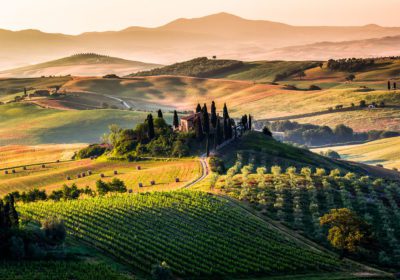
Travel from Florence through the Chianti hills, in the heart of the Chianti Classico region, on a day trip to Badia di Passignano; the hilly landscape, basking in golds and greens, is filled with
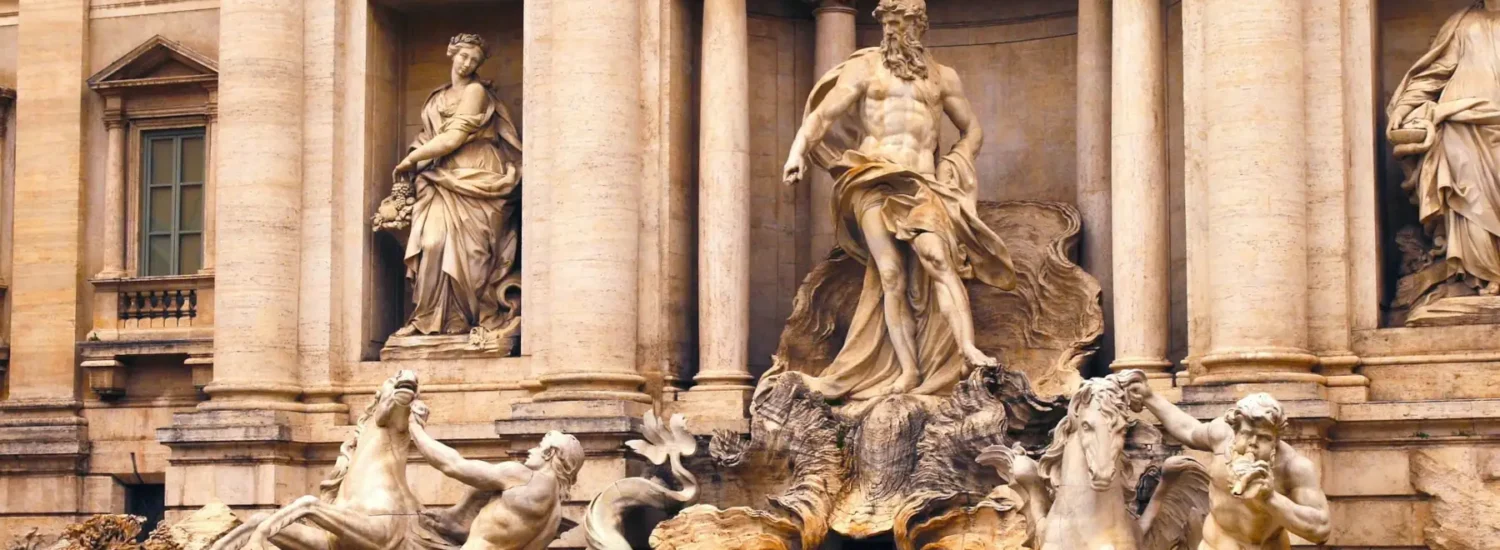
Beyond Rome: lakes, villages and countryside
Rome is one of the great cities of the world — the Colosseum, the Vatican, the Pantheon and the Roman Forum cover two thousand years of history within easy walking distance of each other. But the city rewards slower exploration too: Trastevere’s backstreets, morning markets and smaller museums away from the main queues. Beyond Rome, Lazio shifts quickly into lake country, volcanic hills and medieval towns that see far fewer visitors.
Lake Bracciano and Lake Bolsena are both within an hour of Rome and offer a completely different pace — waterside villages, good local food and calm landscapes. Tivoli has two UNESCO World Heritage Sites: Hadrian’s Villa and the Villa d’Este with its famous terraced gardens. The Castelli Romani hill towns to the south are popular with Romans for weekend lunches and local wine.
Rome is well served by public transport for day trips, and a hire car opens up quieter countryside and coastal areas. Most visitors use Rome as a full base and build day trips around it, but a night or two elsewhere in the region adds a different dimension.
Rome, historic villas and gardens, lakeside escapes and easy countryside day trips.
Rome plus a day outside the city, such as a villa, garden, lake or a classic hill town.
March to June and September to November for comfortable weather, city walking and countryside views.
Mediterranean: warm summers, mild winters, with spring and autumn best for touring.
5.7mil people centred around Rome with historic towns, lakes and countryside beyond the city.
Rome (regional capital), Latina and Viterbo.
Roman-style pastas, seasonal vegetables, simple trattoria cooking and wines from nearby hills.
Excellent trains near Rome; a driver or car helps for countryside routes and day trips.
Popular ways to experience Lazio include our Escorted Tours, World Heritage & Historical Tours through Lazio and explore Art & Culture Tours.
Travel from Florence through the Chianti hills, in the heart of the Chianti Classico region, on a day trip to Badia di Passignano; the hilly landscape, basking in golds and greens, is filled with

Experience Piedmont through historic cities, vineyard landscapes and exceptional food and wine, designed for travellers who appreciate culture, flavour and refined Italian living.
Experience Italy’s classic cities and the Bay of Naples on an 11-day escorted tour from Rome, combining Florence and Venice with Pompeii, Sorrento and Capri, plus Vatican sightseeing and regional food experiences.
An 11-day larger-group route from Rome through Puglia and Matera, combining southern highlights, local food experiences, and comfortable 4-star stays.
Lazio beyond Rome is one of Italy’s most underrated regions, and the best time to discover it is October through November when the Roman light turns golden and the tourist machinery finally slows. Your first impression will likely be Rome itself—unavoidable, exhausting, magnificent—but what makes Lazio truly distinctive is how quickly you can escape the crowds to Renaissance villas, Etruscan tombs, volcanic lakes, and medieval villages perched on crumbling plateaus. Most visitors to Rome never make it beyond the city walls, which means the entire region’s quieter treasures belong almost entirely to you.
The main journey through Lazio starts with Tivoli, just thirty minutes from Rome by train. Villa d’Este is the Renaissance water garden—terraces, fountains, and that particular Italian obsession with controlling nature through engineering—and it’s genuinely worth the appointment slot at the Galleria Borghese before heading out, where you’ll stand alone in front of Bernini’s Apollo and Daphne and feel it stop your breath. Hadrian’s Villa sits nearby, a sprawling 300-acre personal sanctuary where a retired emperor built his own perfect world—the canals, the theatres, the libraries, all designed to recreate the places he’d visited across the empire. Then push north to Lake Bracciano, a volcanic crater lake where Romans swim in summer and the medieval Castello Orsini-Odescalchi reflects perfectly in the water at dusk.
Civita di Bagnoregio is the experience most visitors miss—a medieval hill town on a crumbling tufa plateau, reached by a single narrow footbridge. Barely a dozen residents remain in what locals call the “dying city,” and the isolation, the golden stone, the sound of wind through ancient walls creates something genuinely melancholy and unforgettable. The Etruscan necropolis at Cerveteri is another revelation: circular tomb mounds from the seventh century BC scattered across fields, wandered freely without crowds. Nearby Tarquinia holds Etruscan painted tombs with colours so vivid they seem impossible—blues, reds, yellows still intact after 2,500 years. Ostia Antica, the Roman port city preserved by volcanic ash, sits closer to Rome than Pompeii but receives a fraction of the visitors; the apartment buildings show you how ordinary Romans actually lived.
Lazio’s food is Roman food—simple, excellent, uncompromising. Cacio e pepe in a proper trattoria, where the chef doesn’t use cream, just cheese and pepper and the starch water from the pasta. Carbonara made with guanciale (cured pork jowl), never bacon. From the Castelli Romani hills—the volcanic slopes south of Rome—comes sfincione (a thick savoury pie), porchetta (roasted whole pig) at the weekend markets, and decent white wine that pairs perfectly with the food. In autumn, hunt for porcini mushrooms in the higher areas. The restaurants in Tivoli are expensive and mediocre; eat in Rome or in the smaller hill towns where the food is better and the prices are a fraction of what they charge near the villas.
Practical wisdom: book the Galleria Borghese months ahead—it fills quickly and time slots are limited to two hours. The train from Rome to Tivoli is efficient and avoids parking headaches. October and November offer the best weather and the thinnest crowds, though November can turn grey and wet. Avoid Easter week and May entirely; the region becomes a series of tour-bus queues. If you’re doing Tivoli and Civita in one day, you’ll exhaust yourself—these places deserve slowness. Combine Lazio with Tuscany (one train journey) or Campania (head south to Naples) to build a longer Italian journey without doubling back.
What stays with you about Lazio is the sense that you’ve been present at the places where civilization itself repeatedly began, fell apart, and was rebuilt by the next ambitious ruler or emperor. Rome will exhaust you with its scale and crowds, but the smaller sites and the quieter towns will remind you why people have been fighting over this landscape for three thousand years.


March–May and September–October are the best months for Lazio, especially if your plans include Rome and other walking-heavy historic centres.
Spring is ideal for long city days, day trips and outdoor meals without summer heat. Summer brings hotter afternoons and busier landmarks, so early starts and a slower midday rhythm help. Autumn offers comfortable evenings and a calmer pace, while winter is a great time for museums, food and quieter sightseeing.
Climate figures are indicative monthly summaries derived from Open-Meteo.com historical weather data for 2015–2024.
In Lazio, the difference is in the details: pacing, guides and choosing the right escapes beyond the city.
We help you plan Rome in a way that feels enjoyable, with the right mix of guided highlights and free time to explore.
We recommend the most rewarding escapes into Lazio’s lakes and towns, tailored to your interests and time available.
Clear advice and booking support from Australia, with trusted partners for guides and transport where needed.
Ready to plan your Lazio tour? We'd love to help.
Talk to us about Lazio
One of the best ways to experience Lazio is to add a half-day outside Rome. A villa and garden visit is ideal. It is scenic, culturally rich, and far less intense than another museum queue.
We like this inclusion because it changes the mood of the trip. You get open space, views, and a calmer pace, then return to the city refreshed. It is a simple adjustment that often becomes a favourite day for travellers who want variety without extra complexity.
We can recommend options based on your timing, interests and where you are staying.
Accommodation in Lazio ranges from city hotels in Rome to smaller countryside properties around lakes and historic towns. For many travellers, combining a central Rome stay with a short regional segment is the most comfortable approach. We focus on location and access so the itinerary stays smooth and walkable.
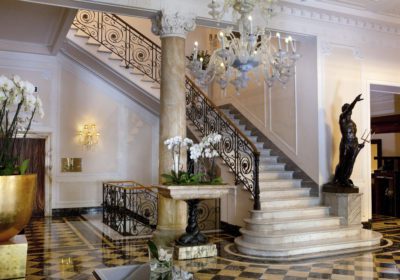
Art deco hotel within walking distance of the Spanish Steps and Villa Borghese.
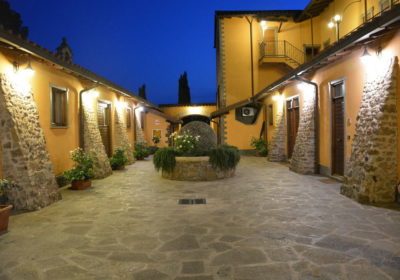
It is a historical convent of Certosini monks building of 1300, it has been recently reported to previous splendour through a careful respect of the…
A pleasingly restored former baroque monastery, now 4-star hotel, set at the foot of the Janiculum hill in Trastevere.
5-star hotel in an impressive building complete with frescoes by Guido Cadorin. Excellently located on Via Veneto.
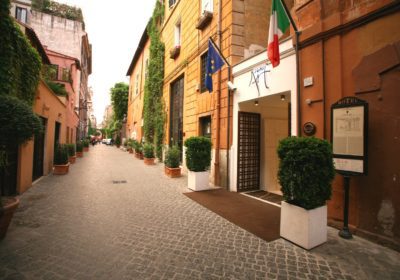
Stunning converted chapel located in the heart of Rome.
Hotel Diana Roof Garden is an accommodation base in Rome, Lazio featured in Fantastic Italy Tour and other Italy Touring itineraries.
An elegant 4-star hotel located in the heart of Rome, a few steps away from Largo Argentina.
Hotel Nazionale Rome is an accommodation base in Rome, Lazio featured in The Great Gardens of Italy Tour.
Hotel St. Martin is an accommodation base in Rome, Lazio featured in Fantastic Italy Tour and other Italy Touring itineraries.
Palazzo Ripetta is an accommodation base in Rome, Lazio featured in A Week In Venice, Florence & Rome.
If you’re exploring Lazio, you may also enjoy these nearby Italian regions, each offering its own landscapes, cuisine and cultural experiences.
October and November are ideal: the light turns golden, the crowds thin significantly, and the weather is warm without the summer heat. September works but is still warm. Avoid May through August entirely—the crowds are relentless and the heat makes walking through ruins miserable. Easter week and May are particularly bad for tourist numbers. December through February are quieter but increasingly grey, wet, and cold. If you must visit in summer, go to Tivoli early (before 10am) and the smaller sites like Cerveteri or Civita where crowds are naturally limited.
Base yourself in Rome for the culture, the food, and the access to everything—yes, Rome is crowded, but every site in Lazio is accessible by train or car without needing accommodation elsewhere. Many visitors stay in distant towns and shuttle into Rome, which wastes three hours a day commuting. If you want a quieter base, Tivoli has decent hotels and restaurants and puts you closer to the villas, but Rome truly is the better choice. Book accommodation in the neighbourhoods beyond the tourist core—Testaccio, San Lorenzo, or Trastevere—and avoid the area around the Colosseum and Vatican entirely.
Civita di Bagnoregio is the priority—the medieval hill town on the crumbling plateau with barely a dozen residents is genuinely unforgettable. The Etruscan necropolis at Cerveteri (and the painted tombs at nearby Tarquinia) give you ancient history without the crowds you’d experience at equivalent sites elsewhere. Ostia Antica, the Roman port city, deserves a morning—it’s closer to Rome than Pompeii and far less crowded, with better-preserved apartment buildings showing you how ordinary Romans lived. Lake Bracciano is peaceful if you visit on a weekday away from the resort areas.
Cacio e pepe made properly—cheese, pepper, pasta water, no cream—at a proper Roman trattoria is non-negotiable. Carbonara made with guanciale (cured pork jowl), never bacon. The porchetta (roasted whole pig) from weekend markets in the Castelli Romani hills is exceptional. Sfincione from the hill towns is excellent. The white wine from Castelli Romani is decent and pairs perfectly with the food. Hunt for mushroom pasta if you visit in autumn. Avoid restaurants within sight of the Tivoli villas—drive to a proper village trattoria instead and you’ll pay half the price and eat better food.
Base in Rome and use trains—the Trenitalia network is efficient and avoids parking hassles. Rome to Tivoli is a straightforward train journey from the city centre. For Civita di Bagnoregio and other inland sites, rent a car for two or three days. The driving is manageable and roads are good. The volcanic lakes (Bracciano) are accessible by car from Rome in forty-five minutes. Avoid driving in Rome itself entirely—the traffic is chaotic and parking is nearly impossible. Taxis and rideshare exist but trains and rental cars will save you money and frustration.
Two to three days minimum if you’re doing Rome plus sites outside the city. Day one: Rome (Galleria Borghese, Forum, Colosseum, at least one neighbourhood’s worth of wandering and eating). Day two: Tivoli (Villa d’Este and Hadrian’s Villa, lunch in town, back to Rome). Day three: rent a car and head to Civita di Bagnoregio or Cerveteri and Tarquinia, staying overnight if possible. If you have only three days total, skip the car-dependent sites and focus on Rome and Tivoli. If you have five days, add Civita, Cerveteri, and a morning at Ostia Antica. Don’t try to rush everything—Lazio rewards slowness.
Lazio pairs naturally with Tuscany to the north—train from Rome to Florence (two-and-a-half hours) and you’re in a completely different landscape. Combine with Campania to the south (Rome to Naples by train, three hours) to build a longer Italian journey covering Rome, Pompeii, and the Amalfi coast without doubling back. Lazio also connects logically with Umbria, though that’s a slightly longer drive. The Rome-to-Florence-to-Siena route is the most common and works well. The Rome-to-Naples route gives you the best of southern Italy.
First-time visitors to Italy almost must include Rome, and Lazio makes perfect sense as a region. Art and history lovers will find Etruscan and Roman sites, Renaissance villas, and world-class museums. Cultural travellers appreciate the depth and density of history in a relatively small area. If you’re combining Italy with other countries or have limited time, Lazio gives you both urban Rome and quieter countryside without excessive travel. Families with teenagers enjoy the mix of famous sites and smaller, less-crowded locations. However, if you want beaches, lakes, or countryside hiking as your primary focus, consider allocating your time differently—those experiences are secondary to the history and culture here.