The Ultimate Alps & Dolomites Tour
Indulge in an exquisite Alpine interlude, a meticulously crafted symphony of grandeur amidst the majestic landscapes of Switzerland, Italy, Germany, and Austria. This journey transcends a mere pause
Mountain landscapes with an easy, well-planned pace
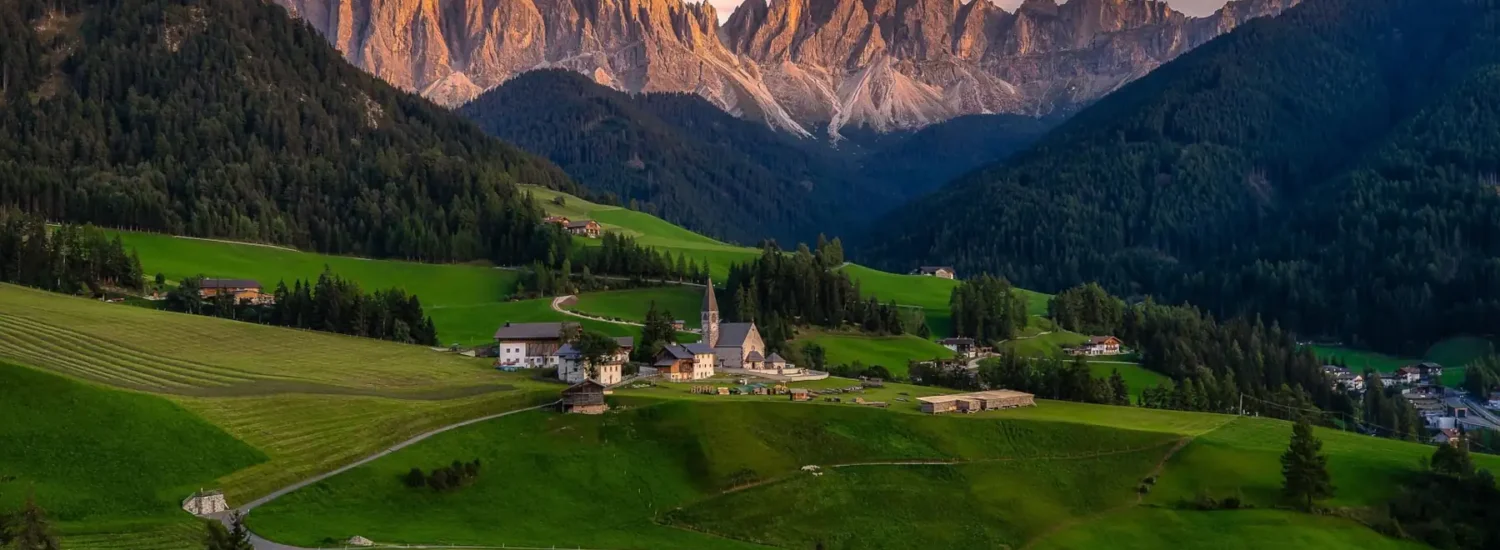
The Dolomites feel distinct from the rest of Italy. The landscapes are bold and open, the towns are compact and walkable, and the day-to-day rhythm leans toward nature, fresh air and time outside. The distinctive dolomite rock creates a light all its own, shifting with the hour—pink at sunrise, golden at sunset, clear and bright in between. This is a landscape designed for moving through it slowly, for noticing details, for breathing properly.
A good Dolomites trip usually hinges on one or two bases that keep drives short and maximise time in the mountains. When the base is right, you can mix scenic drives, cable cars and short walks without feeling rushed. The choice between valleys matters more than the choice between towns; each valley has its own character. Some are busier and more developed; others feel remote and quiet. We choose your base by understanding your pace, your comfort level, and what kind of scenery calls to you most.
Not every Dolomites itinerary needs long hikes. Many of the best experiences are simple: cable cars to high viewpoints, walks through alpine meadows, afternoons spent watching the light change on the peaks from a rifugio terrace. The regions of Trentino-Alto Adige and Veneto both contain Dolomites terrain with subtly different feels. The goal is to match the activity level to your comfort and the season, so that the mountains restore you rather than exhaust you.
Dramatic peaks, wide valleys, alpine villages, cable cars and a fresh-air travel style.
A panoramic viewpoint day, one valley base you love, and time for a short walk that suits your pace.
June–September for summer scenery; late September for quieter days and crisp mountain air.
Changeable mountain weather: cooler nights, quick shifts, and best visibility on clear summer days.
Varies across valleys and towns; the experience depends more on base than numbers.
Cortina d’Ampezzo is a key name; many itineraries use valley towns as bases.
Hearty alpine cooking: dumplings, cured meats, cheeses and comforting meals after outdoor time.
Best with short drives or transfers between valleys. Cable cars make viewpoints accessible without
Popular ways to experience The Dolomites include our Scenic Journeys, Small Group Tours to Italy through The Dolomites and explore Escorted Tours.
Indulge in an exquisite Alpine interlude, a meticulously crafted symphony of grandeur amidst the majestic landscapes of Switzerland, Italy, Germany, and Austria. This journey transcends a mere pause

Explore northern Italy's mountain cultures on this 13-day small group journey through the Dolomites and beyond.
Journey from Milan through the spectacular landscapes of northern Italy on a nine-day small group tour featuring the Bernina Express, the Italian Alps and Dolomites, beautiful lakes, South Tyrol towns and distinctive regional flavours.
A 13-day larger group journey from Rome to Milan combining iconic Italian cities and breathtaking scenery
The Dolomites are at their best when you plan for comfort, not for conquering peaks. The scenery is big and unforgettable, but the daily enjoyment comes from simple choices: a well-placed base, a mix of cable car views and gentle walks, and enough flexibility to adapt when mountain weather shifts in minutes. The rhythm of the mountains teaches you something if you let it.
Choose your valley carefully, because it anchors everything. Cortina is the glamorous base, famous and expensive, better for shopping and people-watching than for quiet mountain time. Val Gardena is broader and more family-oriented, with villages dotted along the valley and good infrastructure. Alta Badia is quieter and more intimate, with beautiful light and world-class food culture (the Michelin stars aren’t accidental). Funes Valley feels almost secret—steep sides, fewer visitors, genuinely peaceful. Start your mornings with a cable car ride to a high ridge, stop for lunch at a rifugio where the knödel or speck boards are handmade that morning, then drift back down for an unhurried afternoon. The Enrosadira alpenglow—when the peaks turn pink and gold at sunset—is real and breath-taking; find a spot on a southern ridge around 8:30 p.m. in summer and you’ll understand why people return here year after year.
Timing changes the experience. June is lush but still cool, perfect for walkers wanting wildflowers without peak crowds. September and early October have the clearest light, the warmest afternoons, and comfortable conditions—most repeat visitors return then. The Great Dolomites Road (the Passo di Ghedina loop) is a driver’s dream: three passes, seven valleys, no real destination needed. In winter, the region transforms into a ski destination, but for quiet, scenic beauty with trails and rifugios open, summer is incomparable. Non-hikers genuinely thrive here: cable cars handle the elevation, walks are gentle, and the village life—piazza espresso, family-run rifugio dinners, quiet evenings—is restorative.
June–September is the prime season for the Dolomites if you want clear views, open trails and comfortable days outdoors. Winter is the other standout for snow-season landscapes.
Summer delivers long daylight for cable cars, viewpoints and gentle walks. Autumn brings crisp air and a calmer feel before conditions turn. Spring can still be cool at altitude, while winter suits travellers drawn to alpine atmosphere, cosy stays and snow-focused experiences.
Climate figures are indicative monthly summaries derived from Open-Meteo.com historical weather data for 2015–2024.
The Dolomites are simple when the bases and distances are sensible. We help you choose the right valley, the right touring style and a pace that keeps the trip enjoyable.
We prioritise locations that keep scenic highlights close and days realistic.
We recommend experiences that suit your comfort level, from gentle to more active.
We build in flexibility so the best days happen on the clearest, most rewarding moments.
Ready to plan your The Dolomites tour? We'd love to help.
Talk to us about The DolomitesThere is a moment, brief and utterly magic, when the Dolomites turn rose-gold. It happens at sunset and sunrise, when the sunlight catches the dolomite stone at just the right angle and sets the entire massif ablaze in shades of coral, pink, and deep crimson. The locals call it enrosadira—“to become pink.” Andrew considers it one of the most remarkable natural phenomena in the Alps, and one that requires spending a night high in the mountains to truly understand.
The best way to experience enrosadira is to stay in a rifugio, sleeping high where you can wake for the sunrise glow and linger for the evening light without the exhaustion of a long hike. Picture yourself on a terrace at 2,000 metres, coffee steaming in your hands as the eastern peaks flush pink with the dawn. Then, after a day of gentle walking and simple pleasures, you return to watch the entire western face of the mountains ignite at dusk, while you sit with a glass of something local and strangers who have become friends over the course of the day. It’s the kind of light that photographs never quite capture; it has to be seen, felt, experienced in person.
A rifugio overnight—whether that’s a night spent hiking between mountain huts or simply sleeping in one location—transforms how you experience the Dolomites. The mountains reveal themselves differently when you’re present for both their sunrise and sunset faces. You’ll eat simple, hearty food (casunziei, speck, warming soups) surrounded by other travellers, all of you paused in the same moment of wonder. It’s perfect for couples, friends, or anyone who understands that the best mountain experiences often happen in stillness, not in summit-chasing.
Dolomites accommodation ranges from classic alpine hotels to smaller, family-run stays. What matters most is access: a base that keeps morning drives short and gives you easy evenings after a day outdoors.
In peak season, well-located properties can book out early. We focus on comfort, views and positioning so your stay supports the trip’s pace.
The Dolomites span areas within Trentino-Alto Adige (South Tyrol) and Veneto. Explore these regions to build a route that fits your preferred base and travel style.
Each valley has a distinct character. Cortina is the name everyone knows, glamorous, lively, excellent restaurants and shopping, but pricey and busier. Val Gardena is the broad valley with several villages strung along it, good for families, with strong culture (the Ladin language is still spoken), reliable facilities, and a lively evening scene. Alta Badia is smaller and more refined, quieter, with exceptional food culture and a less touristy feel; it’s wonderful if you want beauty without crowds. Funes Valley is the hidden gem—steep, intimate, genuinely quiet, with stunning views and a slower pace, but fewer restaurants and shops, so plan accordingly. For most first-timers, Alta Badia or Val Gardena offer the best balance of access, beauty, and authentic mountain life. For luxury and people-watching, Cortina. For real solitude, Funes.
Not at all. Many of our best days come from cable car rides up to a ridge, a gentle 40-minute walk at elevation, lunch at a rifugio, and a cable car back down. The Dolomites have excellent infrastructure for non-hikers: cable cars access most high valleys, walks are well-marked and graded, and rifugios (mountain restaurants and lodges) are scattered throughout so you can stop whenever you like. Families with young children, older travellers, and anyone who simply prefers scenery over strenuous exercise do beautifully here. The view of the Tre Cime (three famous peaks) can be enjoyed from a short cable car ride. Spend your days mixing cable car experiences, gentle valley walks, and long meals with wine and mountain views. The mountains are equally rewarding whether you’re hiking 20 kilometres or moving peacefully through them.
Mountain weather can indeed shift quickly, but rainy days here are manageable and sometimes magical. A valley walk in soft light is genuinely beautiful—the peaks fade into mist, the light is diffused, and you see the mountains differently. Lower-altitude walks and village exploring work well on damp days. Most base villages have excellent museums (folk museums, art galleries, climbing museums), local food shops to explore, and warm cafés where you can linger. A rainy morning at a high rifugio with views down into clouds, a bowl of warm knödel soup and local wine, and a book is not hardship. In summer, rain is usually short-lived; you can often plan a cable car descent, let the afternoon storm pass, and return to walking. If weather turns serious (lightning, heavy rain), a rest day in the village with local food, shops, and spa facilities feels restorative rather than wasted.
Venice (about 3.5 hours south) is the most scenic approach and connects to major cities. Innsbruck, Austria (2 hours north) is surprisingly convenient and gives you Austrian culture along the way. Verona (2.5 hours west) is another option. From any airport, rent a car or take a bus/train to your base valley. The roads are beautiful, so if you’re comfortable driving mountain passes, a rental car gives you freedom to explore the Great Dolomites Road and side valleys. Buses are reliable but slower. Many travellers fly into Venice, spend a day there, then drive north to the mountains—it’s a lovely way to ease into the region rather than arriving at an airport and driving straight into altitude.
September and early October are genuinely superior: the light is the clearest, temperatures are comfortable for walking, crowds are noticeably thinner, and everything feels purposeful. June is beautiful—wildflowers, green valleys, longer days—but it’s cooler (bring a warm layer even in summer), and more families vacation then. July and August are the busiest months, with cable cars crowded, rifugios packed at lunchtime, and some higher trails busy. September avoids the family holidays, the light is golden, and the mountains feel less rushed. If you’re planning a return trip, book September; if June is your only option, you’ll still have an extraordinary experience, just plan early starts to beat crowds and bring layers for temperature swings.
Yes, genuinely. It’s a loop of roughly 100 kilometres connecting seven valleys across three mountain passes (Passo di Ghedina, Passo di Falzarego, Passo di Gardena). The scenery is relentless—every turn reveals new peaks, valleys, and light. You don’t have to drive it in a day; local drivers often break it into sections or drive it multiple times from different bases. If you don’t drive, several bus routes cover sections, and it’s worth asking your base town for the scenic routes to drive or walk. Even in a rental car, the road is narrow in places and requires comfort with mountain driving. The payoff is worth it: it’s one of the great driving routes in Europe and doesn’t feel rushed if you stop often for views, coffee, and photos.
Absolutely, for both groups, with proper planning. Cable cars mean families with young children can reach high elevation without strenuous hiking. Most valleys have gentle walking trails, village playgrounds, and rifugios serving generous food portions. Older travellers appreciate the cable car infrastructure, quiet mountain rhythm, and excellent accommodation and food culture. The pacing is entirely up to you—you can rest whenever you like, walk short distances, and stop for meals whenever it suits you. Summer weather is stable and mild (unlike winter skiing). The main consideration is altitude: people coming from sea level sometimes need a day to acclimatize, so plan your first day as gentle and low-elevation, then build upward. Most families and older travellers find the Dolomites among their favourite travel experiences because the pace is restorative, not taxing.
Winter transforms the region into a major ski destination with excellent facilities, reliable snow, and a festive atmosphere. If you ski or snowboard, winter is extraordinary. If you don’t ski, winter is quieter and more difficult—many rifugios and smaller facilities close, snow can limit walking options, and cold limits outdoor time. Spring (May) and autumn (September–October) are genuinely better for non-skiing visitors: the weather is settled, the mountains are accessible, and facilities are fully open without peak-season crowds. If you love winter landscapes and don’t mind cold and limited activity options, December through February has beauty, but summer and early autumn offer more flexibility and comfort for most travellers.