Tour Essentials
Breakfasts, 1 lunch and 4 dinners with wine, water, coffee
Tour Details
The word palazzo in Italian now refers to any urban dwelling, modern apartment blocks included. Its origins were more august, however, going back to the ‘palatium’: the extensive residence of the Caesars on the Palatine Hill in Rome.
These imperial associations were then assumed by the medieval popes, who called their residences at the Lateran and the Vatican ‘palaces’. The sprawling, fortified strongholds of the Roman baronial families, such as the Colonna and Corsini, also acquired this name, as did the municipal town hall on the Capitol. The popes periodically had difficulty in asserting their authority over their Roman subjects and had to leave town, but their return from Avignon after an absence for most of the fourteenth century was followed during the next two by an extraordinary period of urban renewal. During the Renaissance, popes rebuilt and decorated the Vatican to stress their links with St. Peter, claimed as the successor of Christ and the foundation of their sacred authority. Cardinals followed suit, building on a magnificent scale. Their enormous palaces became satellite courts, sometimes rivalling those of the popes themselves.
Palaces changed from fort-like structures to classically inspired residences built around all’antica courtyards. Inside, they were laid out according to a ceremonial sequence of rooms linked by aligned doors that set the standard for state apartments across Europe for centuries, including at Versailles. In the Baroque period, Roman palaces acquired an unprecedented level of decorative splendour, their princely collections of antiquities and old master paintings displayed in purpose-built galleries whose frescoed ceilings proclaim the glory of the families who owned (and often still own) them. Many of these remarkable residences have survived intact, as have the suburban villas to which their owners would retire to escape the summer heat of the city centre.
Inclusions
Travel by private coach throughout; hotel accommodation; breakfasts, 1 lunch and 4 dinners with wine, water, coffee; all admissions; all tips for waiters; all state and airport taxes; the services of the lecturer and tour manager.
Expert Speakers
Dr Michael Douglas-Scott
Dr Michael Douglas-Scott mixes scholarship with accessible discourse, with reasoned opinion, and is highly sought-after as an art history lecturer. He has lectured for New York University (London campus) and Birkbeck College, University of London, specialising primarily in 16th-century Italian art and architecture. He studied at the Courtauld and Birkbeck College and lived in Rome for several years. He has written articles for Arte Veneta, Burlington Magazine and the Journal of the Warburg & Courtauld Institutes.
Tour by Martin Randall Travel.
Day-by-Day Itinerary
Day 1 - Arrival
Arrive in Rome in the afternoon.
Day 2 - Palatine Hill
Explore the origins of the palazzo on the Palatine Hill. Visit the Domus Augusti, the House of Augustus, which forms part of the vast Palace of Domitian. The present appearance of the Capitol, first centre of ancient Rome, was designed by Michelangelo, and the surrounding palazzi are museums with outstanding ancient sculpture. Palazzo Doria Pamphilj is Rome’s largest noble palace; the picture collection includes paintings by Caravaggio, Titian and Velázquez.
Day 3 - Villa La Farnesina, Palazzo Spada
The delightful Villa La Farnesina has frescoes by Raphael in the Loggia of Cupid and Psyche, and Palazzo Spada accommodates a large art collection and the famous trompe-l’oeil gallery by Borromini.
Day 4 - Villa Medici, Palazzo Barberini, Vatican
Perched on the Pincian Hill is the 16th-century Villa Medici, the seat of the French Academy, whilst Palazzo Barberini is Rome’s National Gallery, with paintings by most of the Italian Old Masters. In the evening there is a private visit to the Vatican Palace. With Michelangelo’s ceiling fresco, his Last Judgement and the quattrocento wall frescoes in the Sistine Chapel, together with Raphael’s frescoes in the Stanze, this is the most precious assemblage of painting in the western world.
Day 5 - Palazzo Colonna
Palazzo Colonna is an agglomeration of the building and decoration of many centuries, and has a collection that includes works by Bronzino, Titian, Veronese and Guercino. The 17th-century Great Hall is surely one of the most magnificent secular rooms in Europe. Continue to Palazzo della Cancelleria, begun in 1485 by Cardinal Raffaele Riario. A masterpiece of Early Renaissance secular architecture, it has frescoes by Vasari of the life of Pope Paul III.
Day 6 - Palazzo Farnese
Palazzo Farnese at Caprarola is a magnificent example of the Mannerist style housing a plethora of spectacular frescoes including those in the Room of Maps by Giovanni Antonio da Varese. One of the many residences built by the Farnese family, its construction was originally entrusted to Antonio da Sangallo the Younger, but was later taken over by Jacopo Barozzi da Vignola. It is memorable also for its characteristic pentagonal composition and spiral staircase.
Day 7 - Villa Borghese
In the morning visit the Villa Borghese, which holds Rome’s finest collection of paintings and sculptures. Some free time before driving to the airport, via the Domus Aurea, Nero’s vast landscaped ‘golden house’. Tour concludes in the afternoon.
Tour Highlights
- The home to the origin of the word palazzo is the perfect place to study its history.
- Buildings that span the millennia, from the imperial residences of the Roman empire to princely Baroque splendour.
- A spectrum of edifices: political headquarters, papal residences, embassies, royal apartments.
- Many visits by special arrangement, including an out-of-hours private opening of the Vatican.
Accommodation
Grand Hotel Palace, Rome: 5-star hotel in an impressive building complete with frescoes by Guido Cadorin. Excellently located on Via Veneto.
Single rooms are doubles for sole use throughout.
Tour Notes
Physical Requirements
Please note: This is a particularly strenuous tour. Unavoidably, there is a lot of walking on this tour. The historic area is vast, and vehicular access is increasingly restricted. Minibuses are used on some occasions but otherwise the city is traversed on foot. The tour should not be attempted by anyone who has difficulty with everyday walking and stair-climbing. Fitness is essential.
Cancellations
For information related to cancellations and any associated costs, please refer to our Terms & Conditions.
Gallery
Ready to travel?
Tell us about your plans and our team will get back to you with everything you need to know about Palaces & Villas of Rome.
- We respond within 1 business day
- Your details are kept completely private
- Happy to speak by phone
- Australia-based team, Italy experts
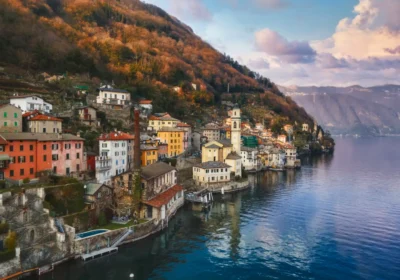
Lake Como & Bernina Express | 4 Day Private Tour 2026
A private Lake Como escape with a full-day Bernina Express experience to St Moritz, combining alpine scenery, flexible free time, and comfortable lakeside accommodation.
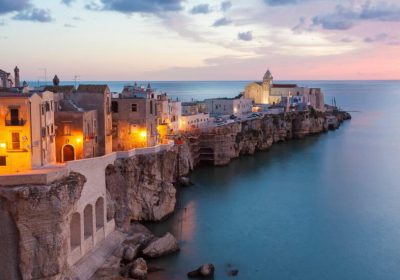
Local Tour of Puglia 2026
UNESCO-listed Alberobello and Matera, baroque Lecce, and Adriatic coastal gems. Enjoy a locally hosted small group week in Puglia with guided day tours, hidden villages, and authentic regional experiences.

Puglia Walking Tour 2027 | 7 Day Small Group Tour
Walk through olive groves, vineyards, trulli country and ancient landscapes on a relaxed seven-day small group tour of Puglia, with long lunches, local guides and six nights in Polignano a Mare.

Italian Lakes Discovery Tour 2026
Lake Maggiore, Lake Orta and Lake Como on a relaxed 9 day small group journey, with alpine landscapes, private boat trips and time to enjoy the lakes at an unhurried pace.