Tour Details
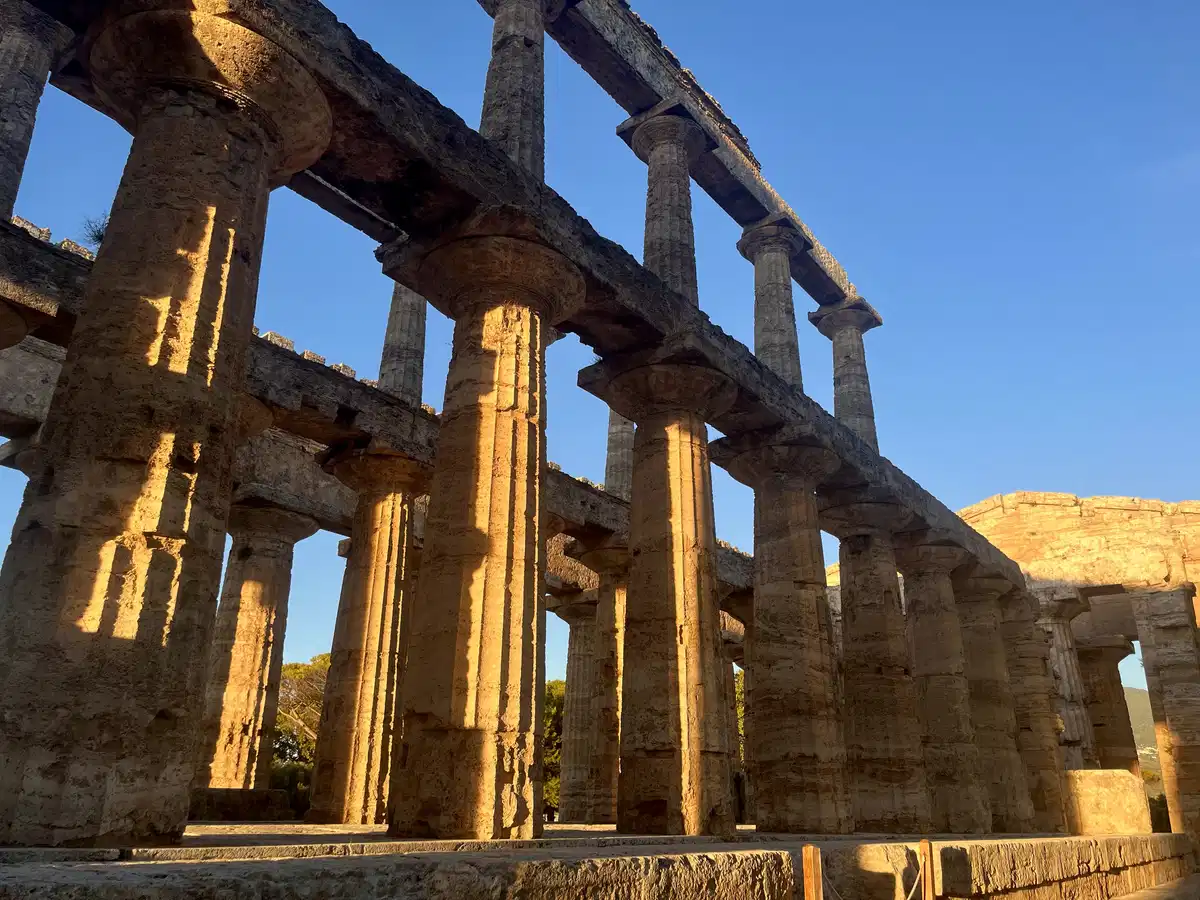
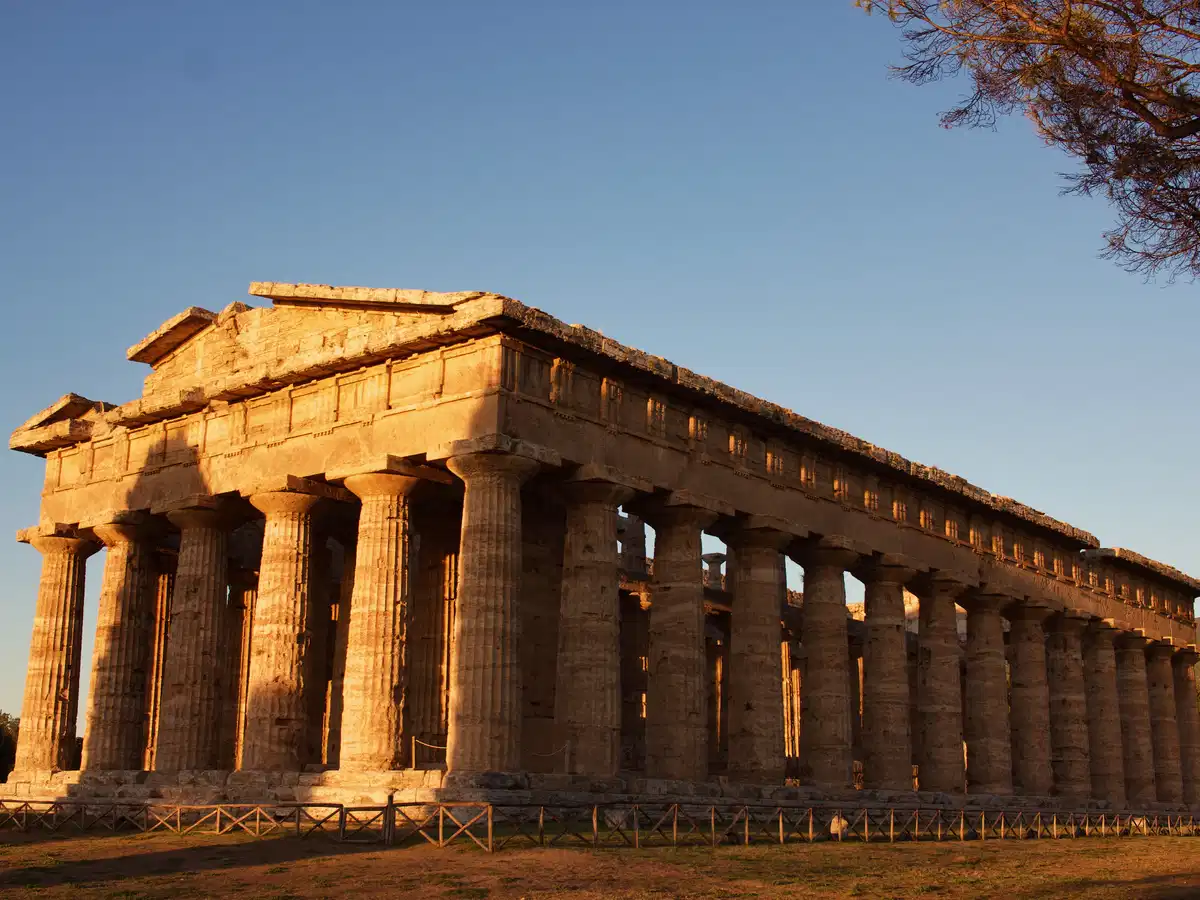
Campania’s favourable climate, fertile soils and natural harbours were attractive to the Greeks looking to trade and for places to settle. They founded their earliest colony at Cumae and others soon followed with Naples and Paestum (Posidonia) among them. The prosperity enjoyed by the Greek colonies is best seen at Paestum where three of the most complete Doric temples anywhere still stand.
After falling under Roman dominion, Campania continued to prosper with wealth generated by agriculture and trade. Towns like Pompeii and Herculaneum thrived and wealthy Romans seeking to escape from the summer heat of Rome built villas along its coast. Campania became an imperial playground with the emperor among the most famous and notorious of all villa owners on the Bay of Naples.
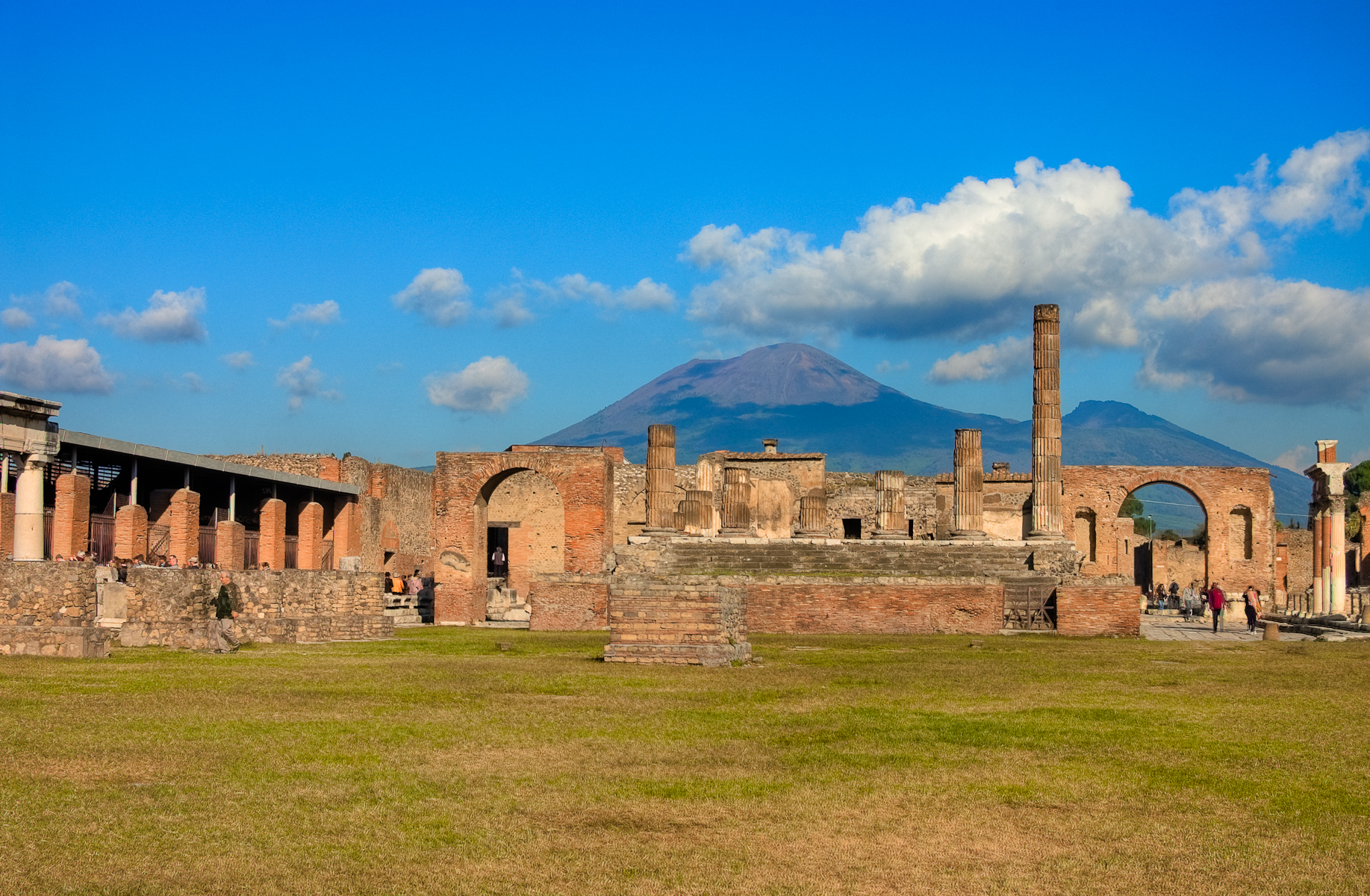
However, life on the Bay of Naples was struck by tragedy when Mount Vesuvius erupted in ad 79 and buried Pompeii and Herculaneum with volcanic ash. Paradoxically, this sudden obliteration preserved the towns with a level of completeness which has no parallel with any other archaeological site in the world.
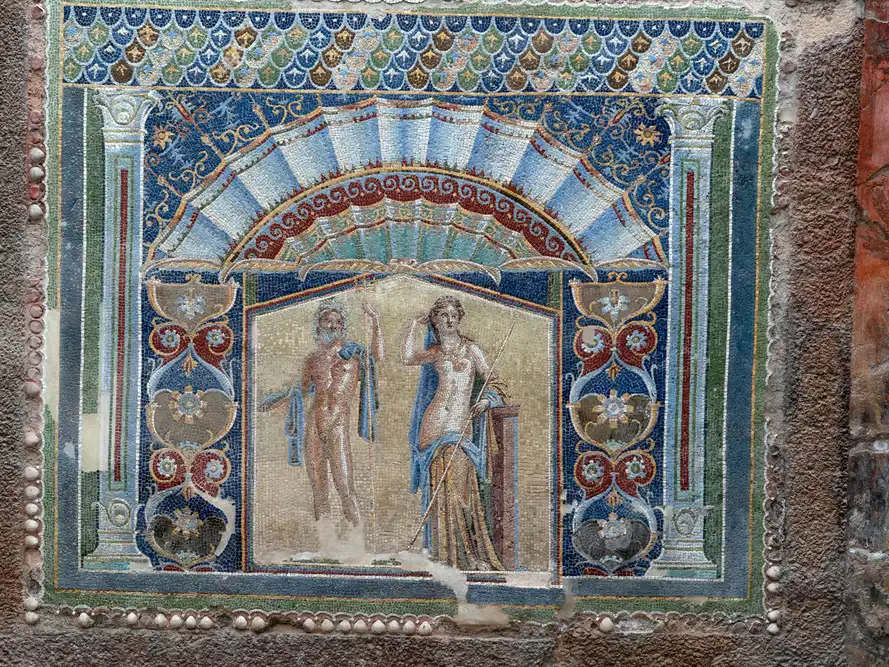
Excavation has revealed them almost in their entirety, providing a unique insight into everyday life in the Roman Empire. Even the smallest and most fragile objects of daily use have survived, along with wall paintings, floor mosaics, precious jewellery and household utensils. The immediacy and vividness with which the imagination is able to grasp a past civilisation is startling and unique.
This tour is particularly strenuous. Please read the advice under ‘Practicalities’.
Inclusions
Travel by private coach, and some travel by train; hotel accommodation; breakfasts, 3 lunches and 3 dinners with wine, water, coffee; all admissions; all tips; all taxes; the services of the lecturer, tour manager and local guides where required.
Accommodation
September 2026
Grand Hotel Angiolieri, Vico Equense: Modern 5-star hotel on the hill-top above the town of Vico Equense. Rooms with a sea view are available on request and for a supplement.
November 2026
Grand Hotel Santa Lucia, Naples: A 4-star hotel on the waterfront about 15 minutes on foot from Piazza Plebiscito, with spectacular views of Mount Vesuvius and the island of Capri. Rooms are all of a good size. Rooms with a sea view are available on request and for a supplement.
2027
Accommodation to be confirmed.
Single rooms are doubles for sole use throughout.
Group Size
Between 10 and 24 participants.
Expert Speakers
Dr Mark Grahame
Archaeologist, lecturer and Member of the Chartered Institute of Archaeologists (MCIfA). He obtained his PhD from Southampton University and his thesis on the spatial layouts of the houses of Roman Pompeii was published as a British Archaeological Report and a series of journal articles. He has coordinated an adult education programme in archaeology at the University of Southampton (2002–2011), has taught courses on the archaeology and history of the Roman Empire for Cambridge and Oxford Universities’ Institutes of Continuing Education, and between 2018 and 2024, ran his own heritage consultancy, M-Arc Heritage Ltd.
Dr Nigel Pollard
Nigel Pollard is an archaeologist and historian, Professor in the Department of History, Heritage and Classics at Swansea University in Wales. He was educated (in Classics) at Cambridge University and (PhD Classical Art and Archaeology) the University of Michigan. He is a Fellow of the Society of Antiquaries of London. Nigel has undertaken archaeological fieldwork in Syria, Egypt, Tunisia, Italy (including Pompeii) and the UK. He has published widely on Roman archaeology and history including, besides academic works, The Complete Roman Legions (Thames & Hudson, 2012). His current research mostly relates to cultural heritage in Italy in the Second World War, including his most recent book Bombing Pompeii: World Heritage and Military Necessity (University of Michigan Press, 2020).
Dr Nigel Spivey
Senior Lecturer in Classical Art and Archaeology at the University of Cambridge and Fellow of Emmanuel College. Among his publications are Understanding Greek Sculpture, Greek Art, Enduring Creation, The Ancient Olympics and Classical Civilization: A History in Ten Chapters. He presented the BBC2/PBS series How Art Made the World.
Practicalities
There is a lot of walking on this tour, some of it over rough ground on archaeological sites and there is a lot of standing in museums and on archaeological sites. Sure-footedness is essential. The day spent in Pompeii can be tiring. Average distance by coach per day: 33 miles (February & November), 70 miles (April & September).
Dates
2026
September 21 – 26
November 23 – 29
2027
April 19 – 24
August 31 – September 5
Price
September 2026
Double Occupancy: $6,010 AUD per person
Single Occupancy: $7,080 AUD per person
November 2026
Double Occupancy: $6,820 AUD per person
Single Occupancy: $8,040 AUD per person
2027
Pricing TBC.
Tour by Martin Randall Travel.
- Our guided tour of Pompeii and Naples is one of the most exciting excursions possible dealing with Roman archaeology. A unique insight into everyday life in the Roman Empire.
- Two principal sites, both buried by the eruption of Vesuvius in AD 79 and preserved with unparalleled completeness.
- Important early Greek settlements, including Paestum, Cumae and Pozzuoli.
Day 1 - Seiano
Arrive at the hotel in the hamlet of Seiano, above the town of Vico Equense, where all five nights are spent.
Day 2 - Paestum
Paestum was a major Greek settlement and is one of the most interesting archaeological sites in Italy. Three outstanding Greek Doric temples stand in a remarkable state of preservation. Visit also the excellent museum which contains a very rare ancient Greek painted tomb and fascinating sculptured panels (metopes) of the sixth-century bc, among the earliest anywhere.
Day 3 - Cumae, Baia, Pozzuoli
Spend the day around the Bay of Naples at some little-visited but fascinating sites. Cumae was the first Greek settlement on mainland Italy, and material from here and other sites visited during the tour can be seen in the archaeological museum of the Phlegraean fields in the spectacularly situated castle at Baia. The port of Pozzuoli has a well-preserved amphitheatre and market.
Day 4 - Pompeii
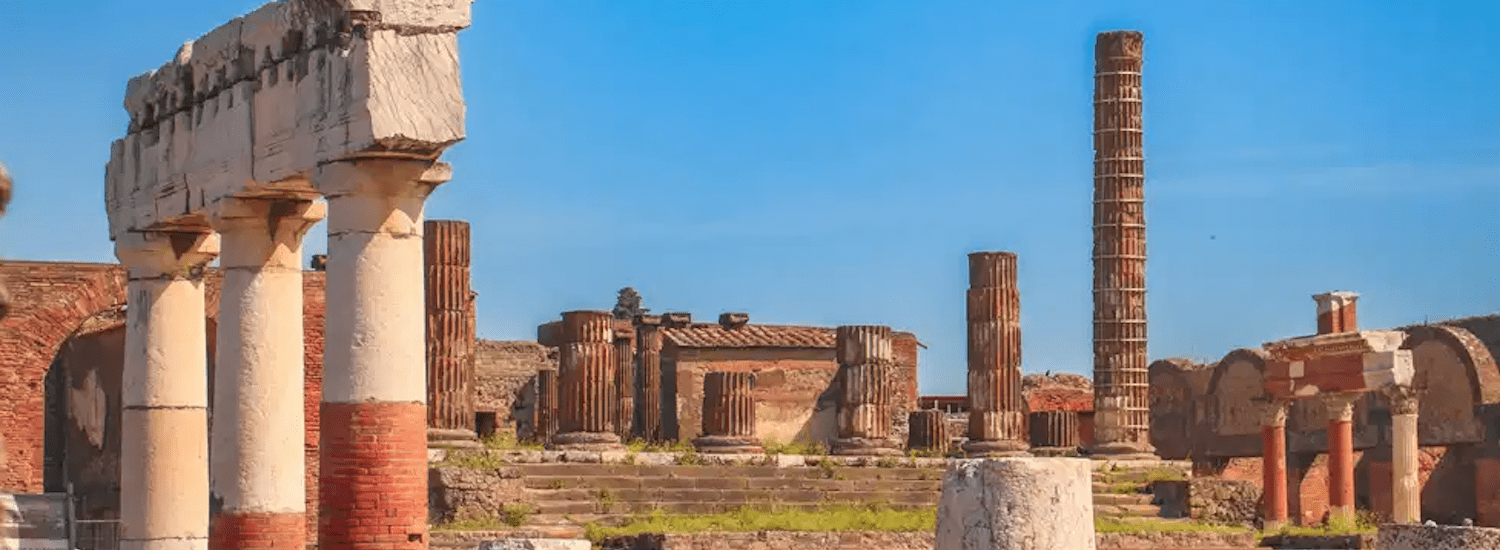
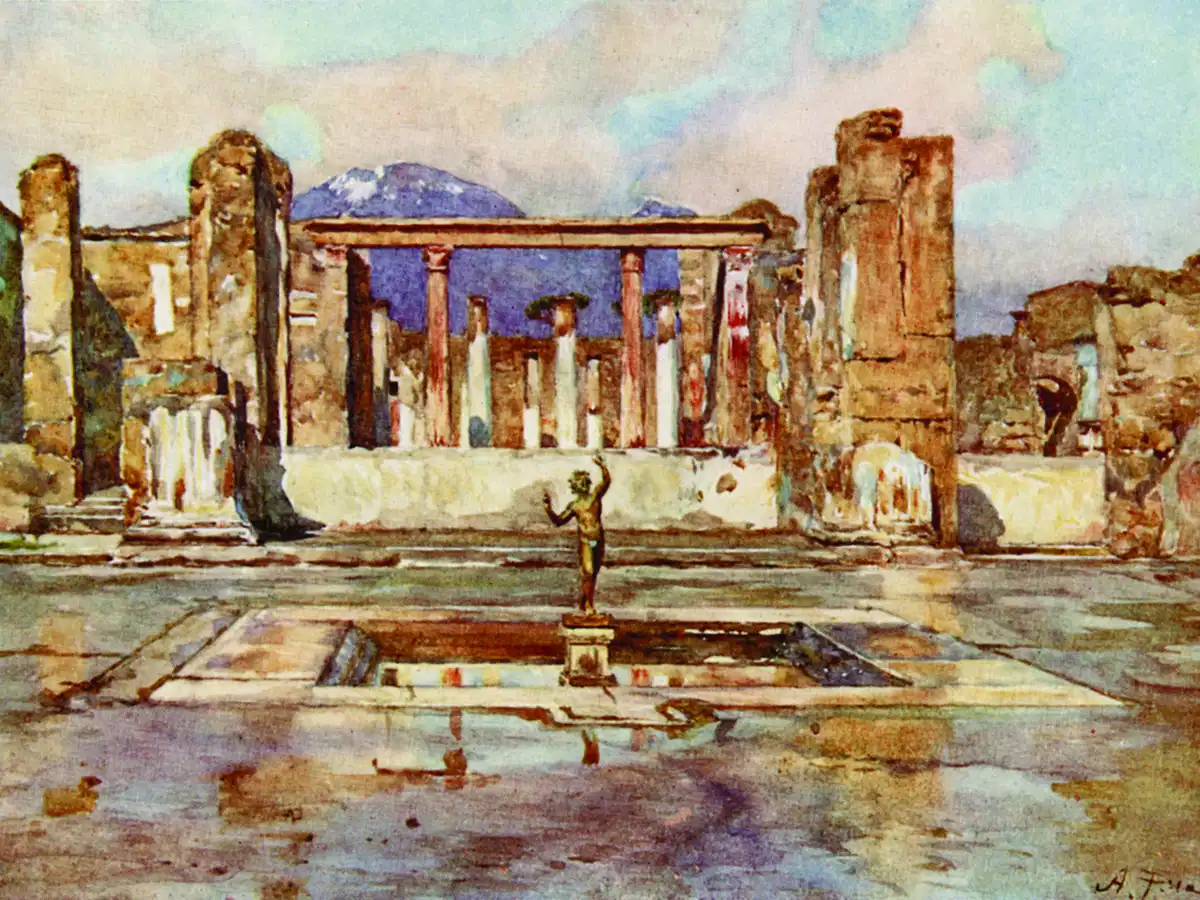
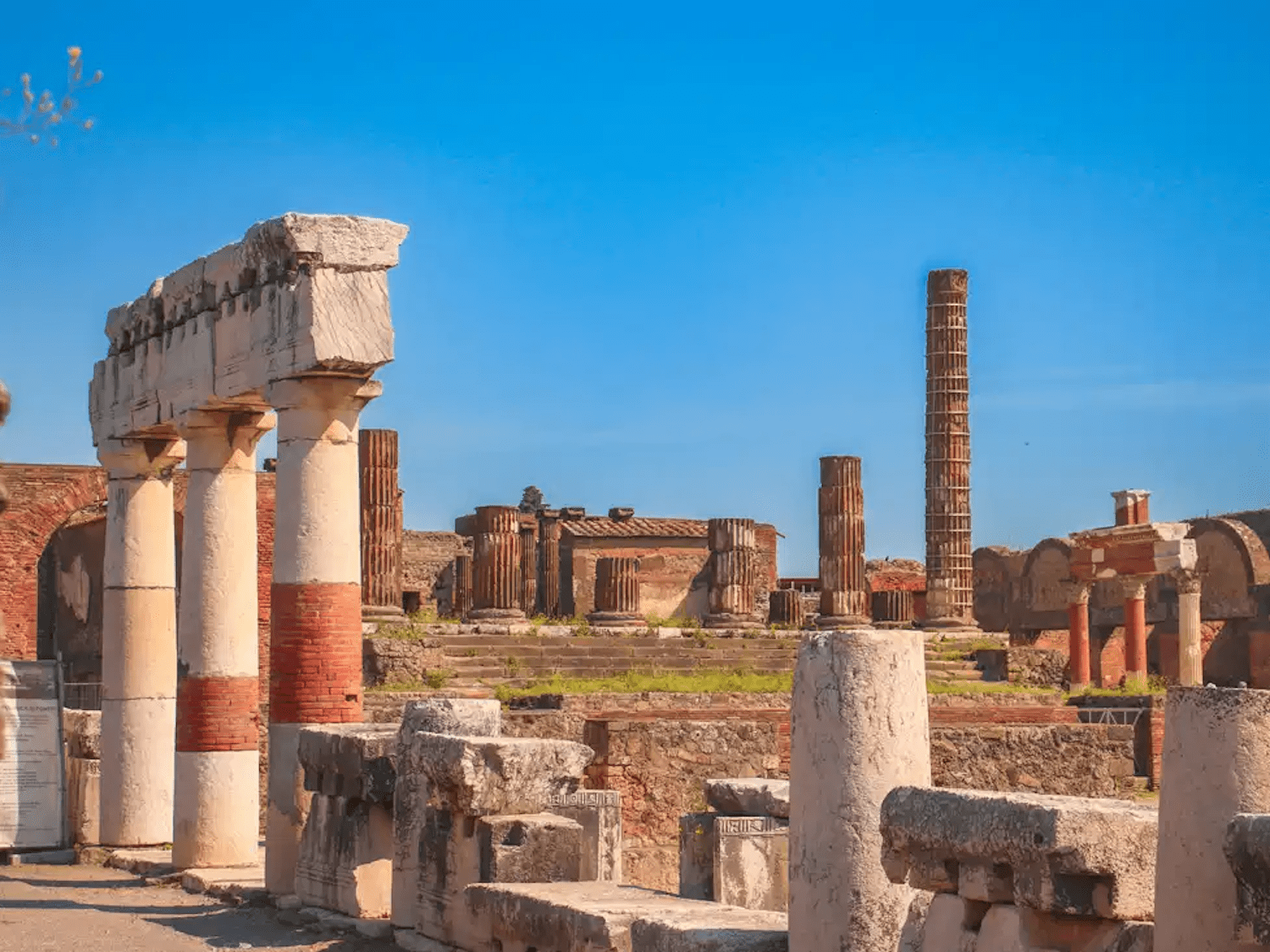
Since its first exploration during the 18th century, ancient Pompeii has been one of the world’s most famous archaeological excavations. The fascination of the site lies not only in the major public buildings such as the theatre, temples and the forum but also in the numerous domestic dwellings, from cramped apartments to luxurious houses with their mosaic pavements and gaudily frescoed walls.
Day 5 - Herculaneum, Oplontis
At Herculaneum, buried by the first pyroclastic surge which was cooler, timber and other fragile artefacts that normally do not survive have been preserved by the unique conditions of burial. Less than a quarter of this town has been excavated, and in the part preserved the emphasis is on private dwellings and their decoration. Visit the lavish villa at Torre Annunziata (ancient Oplontis), which may have been the home of Poppaea, wife of Nero. It is one of the loveliest of ancient sites, with rich wall paintings, a replanted garden and a swimming pool.
Day 6 - Naples
The Archaeological Museum in Naples has one of the finest collections in the world, and is the principal repository for both the small finds and the best-preserved mosaics and frescoes discovered at Pompeii and Herculaneum.
Make an enquiry
Complete the form to enquire about this tour. One of our friendly staff will get back to you as soon as possible!