Tour Details
Umbria brings together art and architecture of the highest importance, unspoilt countryside of breath-taking beauty and pockets of rare tranquillity. Land-locked, and located more or less in the centre of the peninsula, the region is criss-crossed by ancient paths, used for millennia by myriad travellers, traders, pilgrims and preachers. Two itinerant denizens in particular are encountered time and again on this tour: St Francis of Assisi and Piero della Francesca.
Stimulated by the movement of people, goods and ideas along the Via Flaminia, the main route from Rome to Ravenna, the economic and artistic life of Umbria began to flourish in the Middle Ages. Ideas absorbed from Byzantium were encountered and transformed by stylistic novelties from Rome, Florence and Siena.
In the early 13th century, the son of a rich cloth merchant in Assisi, one Francis, came to prominence in the region; he shunned the material excess and increasing secularisation around him and embraced humility, simplicity and harmony with nature as an alternative Christian approach. Perambulating throughout Umbria and central Italy he preached with fervour, touched the hearts of thousands and attracted devoted disciples. Out of this movement the Franciscan Order grew.
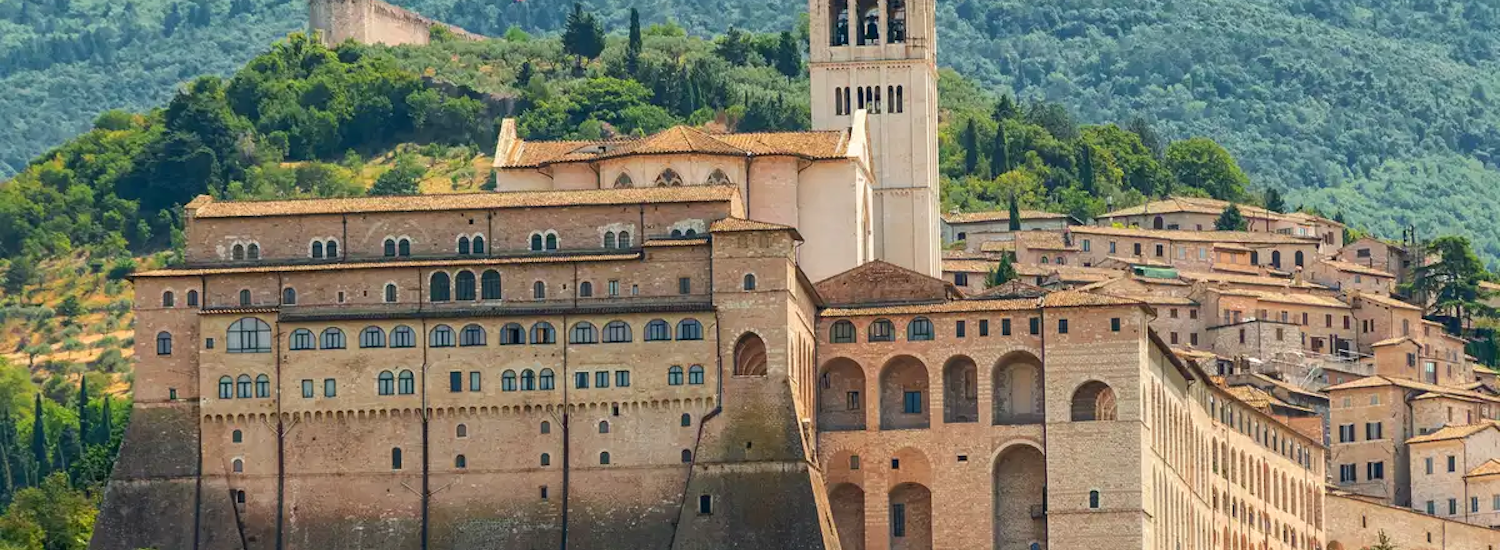
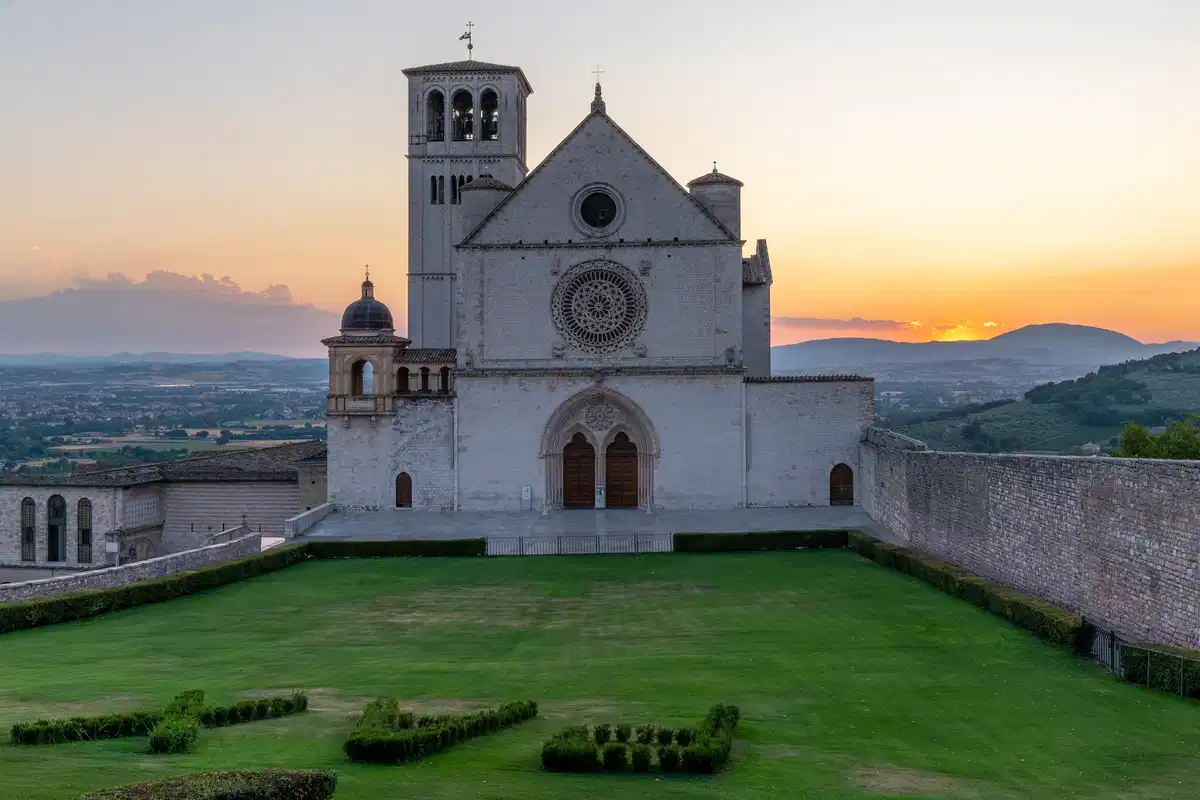
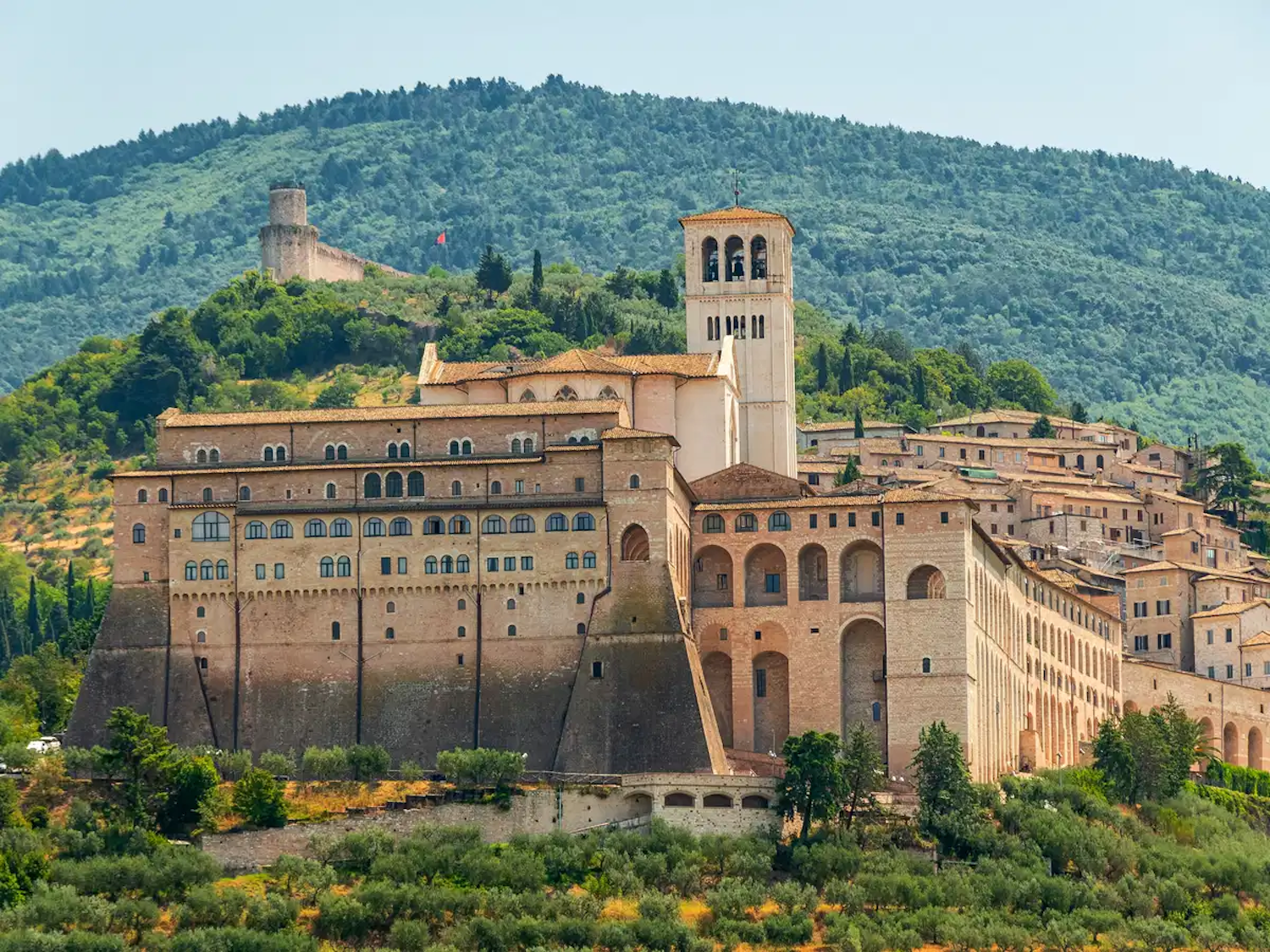
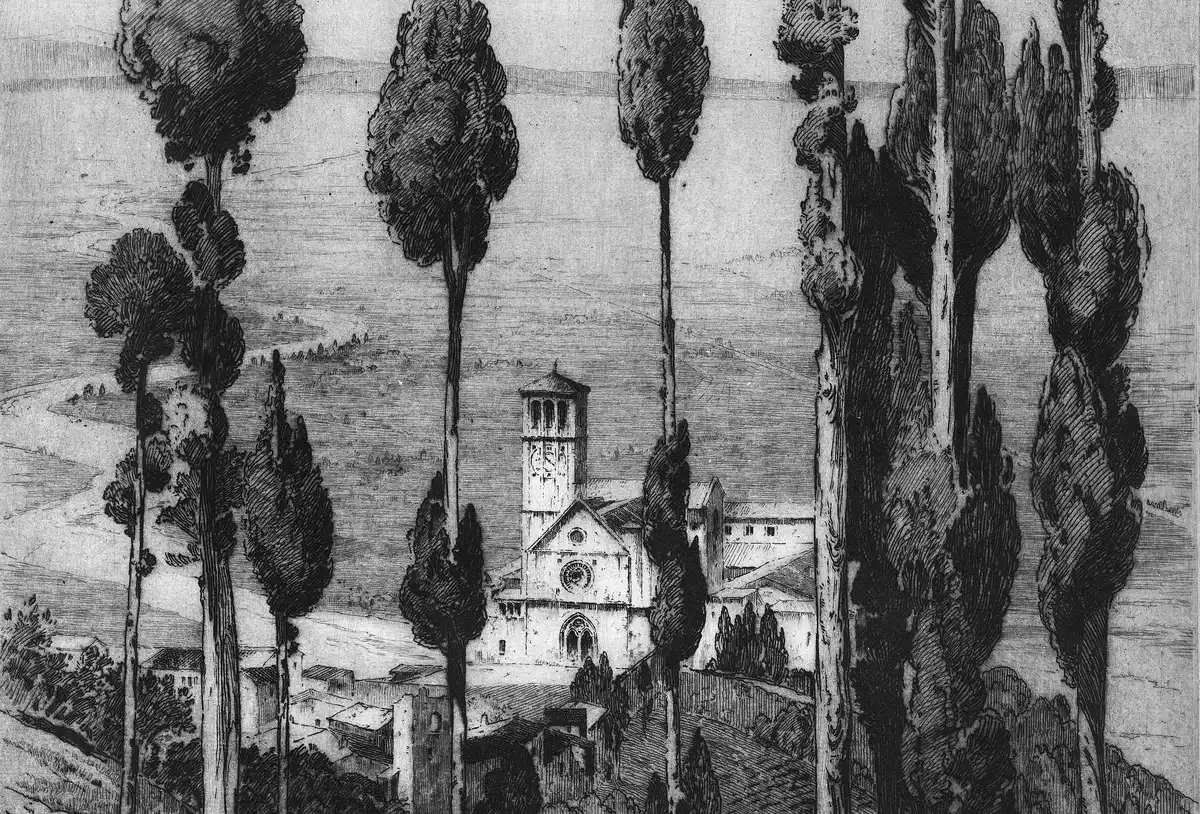
Building work on the Basilica di San Francesco began two years after Francis’s death in Assisi in 1226; the fresco cycles here are some of the most art historically important in Italy. Cimabue, Giotto, Cavallini, Pietro Lorenzetti and Simone Martini are all thought to have been involved in the work and, despite varying degrees of restoration and preservation, they constitute one of the great achievements of western civilization.
The early Renaissance painter Piero della Francesca is also associated with the region. Born c. 1412 in Sansepolcro, which lies just over the border in Tuscany, like all artists of his time he led a peripatetic existence, travelling wherever work took him. In many ways, he stands like a lone star, one who did not leave an obvious trail in terms of followers, but one so bright as still to shine today. Our Piero trail also includes The Resurrection, dubbed by Aldous Huxley ‘the best picture’, and the quiet power and subtle beauty of The Legend of the True Cross in Arezzo’s Basilica di San Francesco.
Inclusions
Travel by private coach; hotel accommodation; breakfasts; 5 lunches and 4 dinners with wine, water, coffee; all admissions; all tips; all taxes; the services of the lecturer, tour manager and walking guide.
Accommodation
Hotel Tiferno, Città di Castello: central, 4-star hotel, renovated respecting the original architecture.
Hotel San Luca, Spoleto: A comfortable 4-star hotel, located in an elegantly converted former tannery, just within the city walls. Single rooms are doubles for sole use throughout.
Group Size
Between 10 and 18 participants.
Expert Speakers
Mr Nigel McGilchrist
Writer and lecturer who lived in Italy for over thirty years, latterly in Orvieto where he produced olive oil and wine. Worked for the Italian Ministry of Arts in the field of wall-painting conservation and has taught at Rome University, the University of Massachusetts and was Dean of European Studies for a consortium of American Universities. For six years he walked every path and village of the sixty inhabited Greek islands which culminated in the twenty volume McGilchrist’s Greek Islands, abbreviated to the Blue Guide to The Aegean Islands. He now lives on the island of Kythera.
Dr Thomas-Leo True
Art historian specialising in Renaissance and Baroque architecture in Rome and the Papal States, and Assistant Director of the British School at Rome from September 2015. He received his doctorate from Cambridge University, and also studied at the British School at Rome, where he was Rome Scholar (2009–10) and Giles Worsley Fellow (2013). He has lived in Le Marche region of Italy and is currently writing his first book on the Marchigian Cardinals of Pope Sixtus V.
Price
Double Occupancy: $6,910 AUD per person
Single Occupancy: $7,790 AUD per person
Tour by Martin Randall Travel.
- Six walks of between 5 and 7.5 km between Arezzo and Assisi through the inimitable Umbrian countryside.
- Enjoy the art of Piero della Francesca, Luca Signorelli and Giotto.
- Visit isolated hermitages, churches and cathedrals associated with St Francis.
Day 1 - Città di Castello
From Florence Airport in May or Bologna Airport in October, be driven to Città di Castello where you will spend your first four nights.
Day 2 - Montecasale, Sansepolcro
St Francis passed through the Convent of Montecasale in 1213 on his journey to the Adriatic and Jerusalem, and a small community of friars have continued to provide pilgrim accommodation since then. Walk from Montecasale to La Montagna: c. 7.5 km, c. 2 hours. A high-level walk on paths, tracks and exposed ground, and through woodland. It is graded as challenging given the uneven nature of the paths and a long downhill section at the end. Lunch in Sansepolcro, then visit the museum in the former town hall, where Piero della Francesca’s early masterpiece, Madonna della Misericordia and the marvellous Resurrection fresco are housed.
Day 3 - Le Celle, Cortona
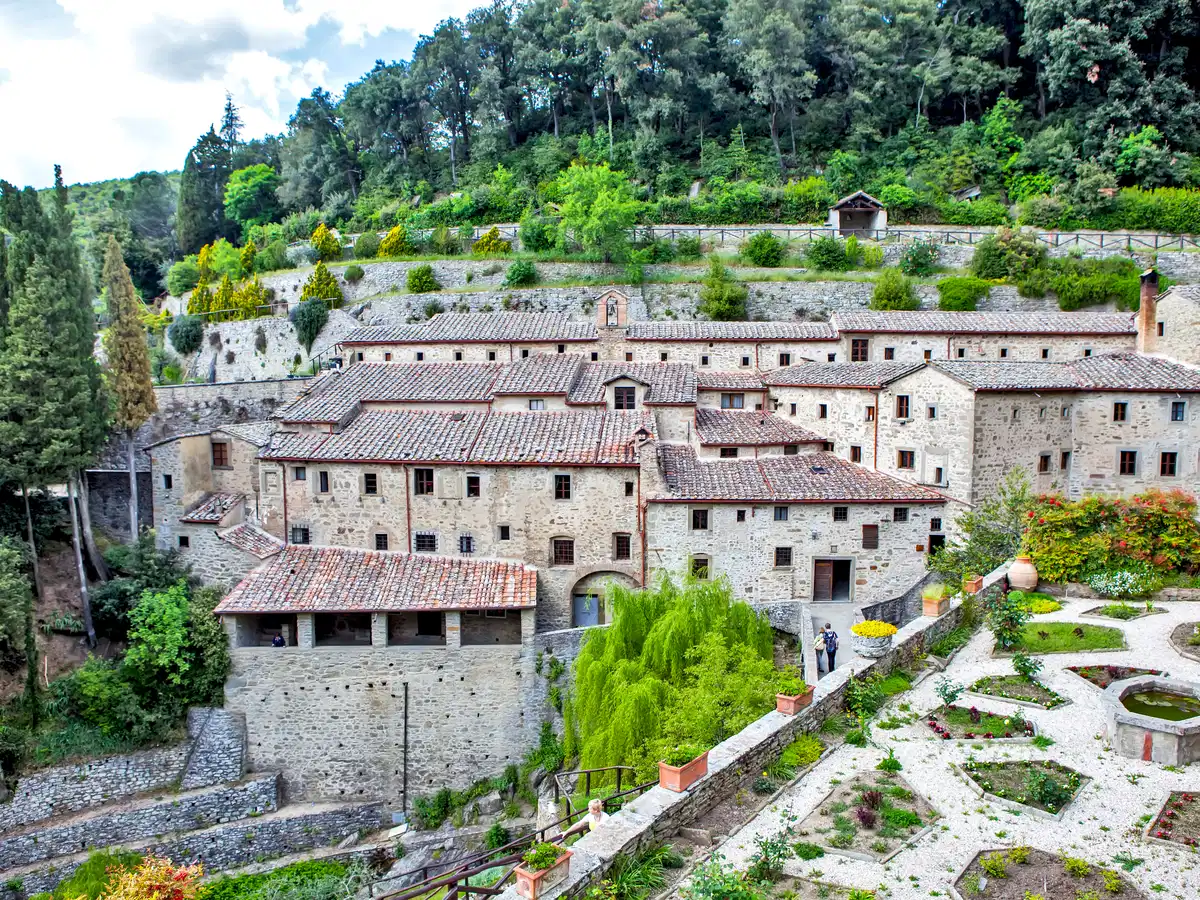
Begin the morning’s walk from the immaculately kept Eremo Le Celle, which Francis visited in 1226: c. 5 km, c. 2 hours. This is a moderate walk that starts gently downhill, on woodland tracks outside Cortona, before joining a cobbled Roman path that leads uphill to the town centre. Cortona is highly attractive and has a good art gallery, notable for paintings by Fra Angelico and Signorelli.
Day 4 - Arezzo, Monterchi
Drive to Arezzo to see Piero della Francesca’s great fresco cycle, The Legend of the True Cross, painted for the Franciscan order and executed over a 20-year period. After lunch, walk from Monteautello to Monterchi: c. 5.5 km, c. 1½ hours. This is an easy, gently undulating walk on farm tracks and country roads. Piero della Francesca’s beautiful Madonna del Parto has its own museum in the village.
Day 5 - Montefalco, Bevagna, Trevi
Known as the ‘Balcony of Umbria’, Montefalco’s medieval church houses 15th-century frescoes of the Florentine and Umbrian school; the town is also well known for its inky and full-bodied Sagrantino wines. An easy walk on country trails and lanes from Montefalco to Fabbri: c. 5 km, c. 1½ hours. Drive to Bevagna, the Roman Mevania, home to one of Italy’s most harmonious squares. First of three nights in Spoleto.
Day 6 - Assisi
Morning walk from Pieve San Nicolò to Assisi: c. 6 km, c. 2 hours. This is a moderate walk on a strada bianca (rough farm track), minor roads and woodland paths. The path predominantly descends, although the last section is uphill through the Bosco Francescano. The walk ends through the city gate which leads directly to the Basilica. Here we see one of the greatest assemblages of medieval fresco painting, including the cycle of the Life of St Francis which some attribute to Giotto. There is time to walk through the austere medieval streets and visit the church of Sta. Chiara.
Day 7 - Todi, Campanello sul Clitunno
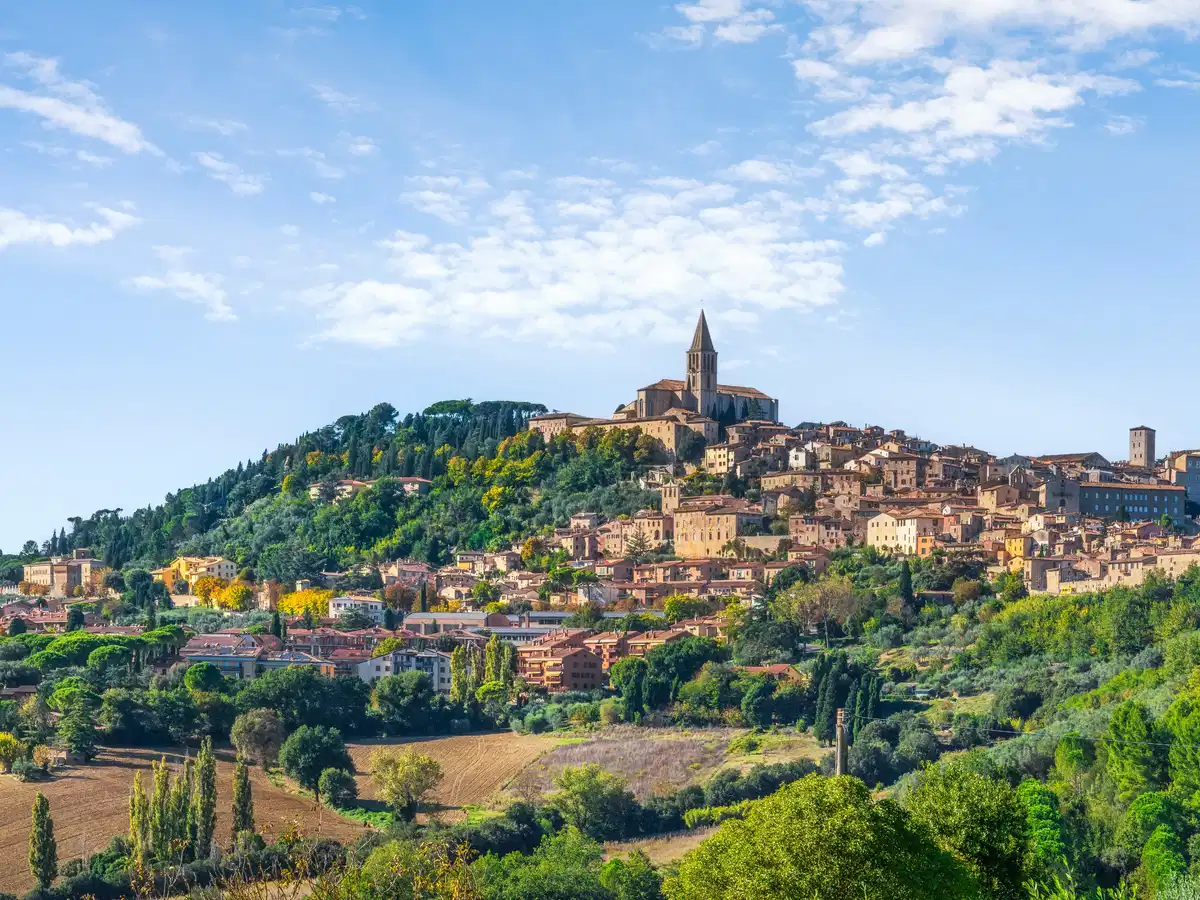
Walk an easy route towards Todi, c. 2 hours, before carrying on to arrive in the hilltop town by coach. There is time to enjoy the peaceful town which is complete with one of Umbria’s finest medieval piazzas and a series of notable buildings. The 12th-century Duomo boasts a spectacular central rose window. Campanello sul Clitunno is home to the Fonti del Clitunno, an enchanting series of springs and the true pearl of the area, as well as the early Christian temple, the Tempietto del Clitunno.
Day 8 - Spoleto
Spend the morning in Spoleto before driving to Rome Fiumicino Airport.
Make an enquiry
Complete the form to enquire about this tour. One of our friendly staff will get back to you as soon as possible!